
Ulcerative Colitis: Symptoms, Causes, Treatment & Diet (Complete Guide 2026)
Ulcerative Colitis: Symptoms, Severity, and Disease Classification
What is Ulcerative Colitis?
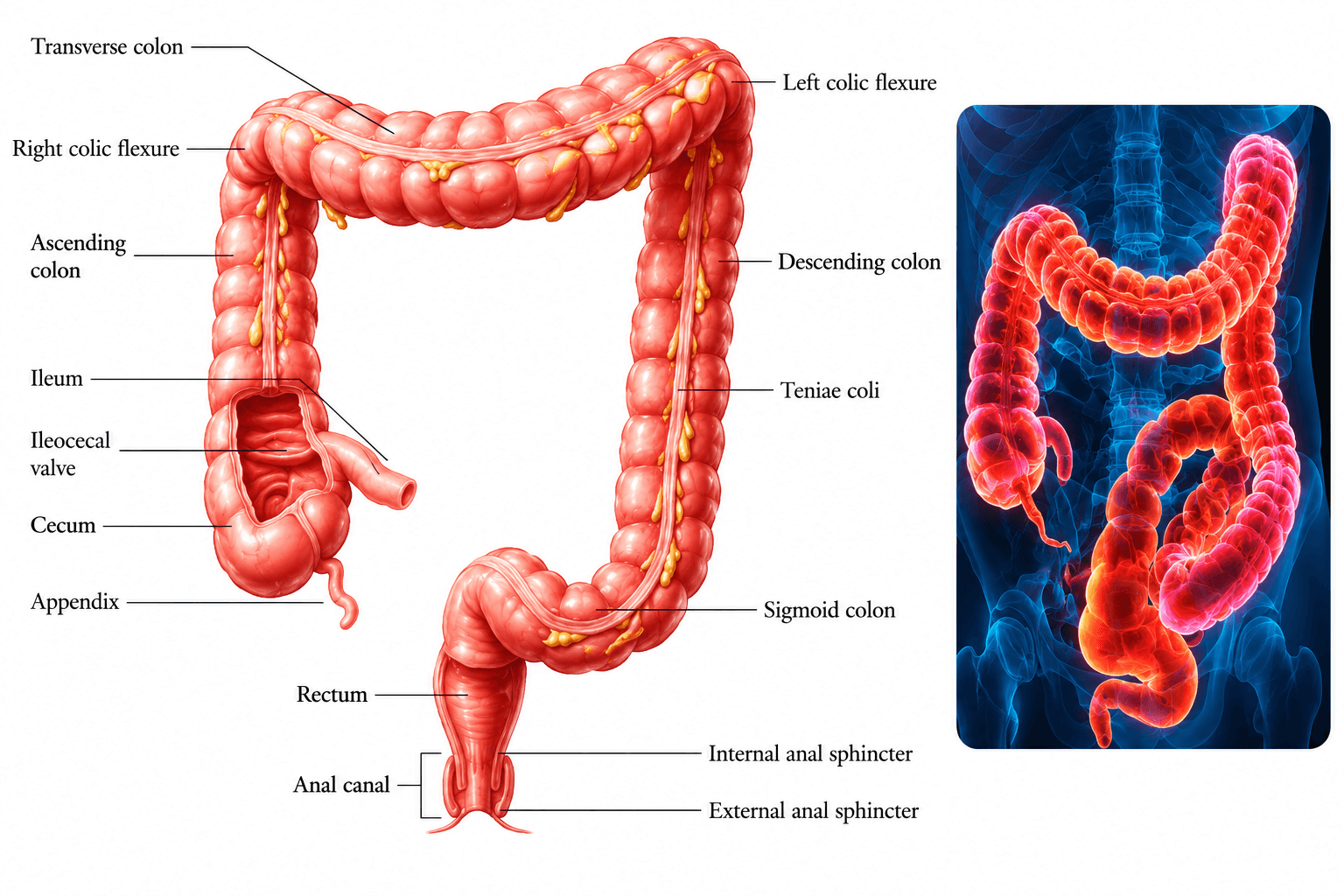
Ulcerative Colitis is one of the two major forms of IBD, the other being Crohn’s Disease. Ulcerative colitis (UC) is a chronic inflammatory bowel disease (IBD) characterized by mucosal inflammation confined to the rectum and colon, leading to superficial ulcerations. The condition primarily affects the innermost lining of the large intestine and progresses in a continuous pattern.

Crohn’s disease schematic representation highlighting key pathological features within the small intestine, such as skip lesions, transmural inflammation, and fistula formation.
Etiology of Ulcerative Colitis: Causes and Risk Factors
What Causes Ulcerative Colitis?
The exact cause (etiology) of ulcerative colitis (UC)—as well as Crohn’s disease (CD)—remains unknown. However, current research suggests that UC is a multifactorial disease, involving a complex interaction of several contributing factors.
Key Factors Involved in UC
1. Genetic Susceptibility
Individuals with a family history of inflammatory bowel disease (IBD) are at a higher risk. Certain genetic variations may predispose individuals to abnormal immune responses in the gut.
2. Immune System Dysfunction
A major contributing factor is the dysregulation of the enteric immune system. In genetically predisposed individuals, the immune system mistakenly attacks the intestinal lining, leading to:
- Acute inflammation
- Chronic inflammation
- Progressive mucosal damage
3. Environmental Triggers
Environmental factors play a significant role in triggering or worsening ulcerative colitis. These may include:
- Diet and lifestyle factors
- Antibiotic use
- Smoking cessation (paradoxically linked with UC onset)
- Stress and gut microbiome changes
Role of Microorganisms in UC
Although the exact triggering antigen is still unidentified, several potential sources have been proposed, including:
- Pathogenic microorganisms (harmful bacteria)
- Commensal microbiota (normal gut flora imbalance)
- Metabolic byproducts produced by intestinal bacteria
These factors may initiate an abnormal immune response, leading to persistent inflammation in the colon.
Pathophysiology of UC Overview
The interaction between genetic susceptibility, immune dysfunction, and environmental triggers leads to:
- Activation of inflammatory pathways
- Continuous immune response in the colon
- Damage to the mucosal lining of the intestine
This process ultimately results in the characteristic symptoms of UC.
Types of Ulcerative Colitis Based on Location
Proctitis (Rectal Involvement)
When inflammation is limited only to the rectum, the condition is referred to as proctitis. This is generally the mildest form of ulcerative colitis.
Distal Ulcerative Colitis
If the inflammation extends from the rectum to the descending colon, it is known as distal disease. This type can often be effectively managed with topical (rectal) therapies.
Extensive Ulcerative Colitis
When a larger portion of the colon is affected, it is termed extensive ulcerative colitis. The greater the area involved, the more severe the symptoms tend to be.
Symptoms of Ulcerative Colitis
During flare-ups, patients with ulcerative colitis may experience:
- Frequent bowel movements (often several times a day)
- Bloody diarrhea
- Abdominal pain and cramping
- Urgency to pass stools
- Fatigue and reduced quality of life
These symptoms can significantly impact daily functioning and overall well-being.
Classification of Ulcerative Colitis by Severity
Mild Ulcerative Colitis
- Fewer than 4 stools per day
- Minimal or no systemic symptoms
Moderate Ulcerative Colitis
- More than 4 stools per day
- Minimal signs of systemic toxicity
Severe Ulcerative Colitis
- 6 or more bloody stools per day
- Signs of systemic toxicity, including:
- Fever
- Tachycardia (increased heart rate)
- Anemia
- Elevated erythrocyte sedimentation rate (ESR)
Fulminant Ulcerative Colitis
- More than 10 stools per day
- Severe symptoms such as:
- Continuous bleeding
- Intense abdominal pain
- Abdominal distension
- Fever and anorexia
Patients with fulminant disease are at high risk of life-threatening complications, including:
- Toxic megacolon
- Bowel perforation
Complications of Severe Ulcerative Colitis
If left untreated or poorly controlled, severe ulcerative colitis can lead to serious complications such as:
- Toxic megacolon (rapid colon dilation)
- Intestinal perforation
- Severe dehydration
- Increased risk of colorectal cancer
Diagnosis of Ulcerative Colitis (UC)
How is Ulcerative Colitis Diagnosed?
There is no single definitive test for diagnosing ulcerative colitis. Diagnosis is based on a combination of:
- Clinical symptoms
- Endoscopic findings
- Histological (biopsy) evidence
Initial Investigations
Stool Tests to Exclude Infection
Before confirming UC, infections must be ruled out:
- Routine stool cultures (bacterial pathogens)
- Clostridioides difficile toxins (A & B)
- Ova and parasite examination
- E. coli O157:H7 (requires special testing)
- Consider gonorrhea or chlamydia in selected cases
- Rule out opportunistic infections in immunosuppressed patients
Endoscopic Evaluation
Sigmoidoscopy (First-Line Test)
- Strongly suggests UC diagnosis
- Preferred in initial presentation
- Biopsies help confirm diagnosis
- Performed without bowel prep during active flares
Colonoscopy (When to Use)
- Done after disease control to assess:
- Extent of disease
- Rule out Crohn’s disease
- Avoid in severe active UC (risk of perforation)
- Essential for:
- Cancer surveillance
- Atypical or severe symptoms

Colonoscopy images demonstrating the spectrum of ulcerative colitis severity. Left- Mild disease shows mucosal edema, loss of normal vascular pattern, and patchy subepithelial hemorrhage, Right–while severe ulcerative colitis reveals extensive mucosal inflammation with hemorrhage, mucopus, and friability with spontaneous bleeding.

Biopsy and Histology
Importance of Biopsy
- Multiple biopsies from different colon segments

Contrast-enhanced barium enema radiograph demonstrating marked loss of haustration throughout the colon, producing the characteristic “lead pipe” appearance, a classic imaging feature associated with chronic ulcerative colitis.
- Confirms diagnosis and disease extent
- Helps differentiate UC from Crohn’s disease
- Terminal ileum biopsy may be needed

Key Endoscopic Findings in UC
Early Features
- Loss of normal vascular pattern
- Mucosal erythema (redness)
- Edema
Progressive Disease Changes
- Granular, friable mucosa
- Mucopurulent exudates
- Superficial ulcerations (varied shapes and sizes)
Severe Disease Features
- Spontaneous bleeding
- Extensive ulceration
- Denuded mucosa
- Luminal narrowing due to edema
Chronic Ulcerative Colitis Changes
Pseudopolyps
- Result from repeated inflammation and healing
- Appear as:
- Small, soft, pale lesions
- Sometimes large or polyp-like
- Require biopsy to rule out malignancy
Structural Changes (Long-Term Disease)
- Loss of normal colon architecture
- Reduced haustral folds
- Narrowed lumen
- “Lead pipe” appearance on imaging
Strictures
- Caused by chronic inflammation
- Important: Always exclude colorectal cancer, especially:
- Long strictures
- Proximal colon strictures
Ulcerative Colitis vs Other Conditions: Clinical, Endoscopic, and Histological Differences – Colitis vs Ulcerative Colitis
| Condition | Key Clinical Features | Typical Endoscopic/Radiologic Findings | Characteristic Histology |
| Ulcerative Colitis (UC) | Persistent bloody diarrhea, urgency, and rectal bleeding | Continuous inflammation beginning in the rectum with superficial mucosal ulcers | Crypt distortion, diffuse inflammatory infiltrate, crypt abscesses, goblet cell depletion |
| Crohn’s Colitis | Abdominal pain, diarrhea, perianal disease, bleeding less frequent than UC | Patchy (“skip”) lesions, rectal sparing, deep ulcers, strictures, fistulas, possible small bowel involvement | Transmural inflammation, granulomas, fissures, focal crypt changes, preserved goblet cells |
| Ischemic Colitis | Sudden abdominal pain with bloody diarrhea, mainly in older adults | Segmental involvement (commonly splenic flexure or sigmoid colon), thumbprinting, ulceration | Mucosal necrosis, vascular congestion, fibrosis in chronic disease |
| Microscopic Colitis | Chronic watery diarrhea without visible blood | Colon usually appears normal during colonoscopy | Increased intraepithelial lymphocytes or thickened subepithelial collagen band |
| Infectious Colitis | Acute diarrhea with fever, abdominal cramps, and recent foodborne illness or infection | Nonspecific inflammatory changes | Preserved crypt architecture with acute neutrophilic inflammation and edema |
| Amebic Colitis | Bloody diarrhea after travel to endemic regions; positive stool antigen or parasite testing | Discrete ulcers, ameboma, or colonic strictures | Trophozoites identified within flask-shaped ulcers using special stains |
| Gonococcal Proctitis | Rectal pain, purulent discharge, history of receptive anal intercourse | Localized rectal inflammation with granular mucosa | Dense neutrophilic infiltration with Gram-negative diplococci |
| Pseudomembranous Colitis | Profuse diarrhea following recent antibiotic use; Clostridioides difficile infection | Yellow-white pseudomembranes over inflamed mucosa | Fibrinopurulent exudates (“volcano lesions”) over damaged mucosa |
Management of Ulcerativ Colitis

Color-coded clinical flowchart illustrating the management of ulcerative colitis, outlining treatment pathways for mild-to-moderate and severe disease, including 5-ASA therapy, corticosteroids, hospitalization, biologic therapy, surgery, and maintenance treatment.
What is What is azathioprine? Is azathioprine an immunosuppressant? – Yes Becaues it acts on DNA below is the detailed explination –

Azathioprine metabolism pathway illustrating the roles of TPMT (Thiopurine S-methyltransferase), Xanthine Oxidase (XO), and HGPRT (Hypoxanthine-Guanine Phosphoribosyltransferase) in producing active 6-thioguanine nucleotides (6-TGN), the metabolites responsible for the drug’s therapeutic immunosuppressive action.
Ulcerative colitis diet during flare:
Ulcerative Colitis Diet: Foods to Eat, Foods to Avoid, and Diet During a Flare
What Is the Best Diet for Ulcerative Colitis?
There is no single diet that cures ulcerative colitis, but dietary changes can help reduce symptoms during flare-ups, support healing, prevent nutritional deficiencies, and improve quality of life. The best eating plan varies from person to person depending on disease activity, food tolerance, and nutritional status.
Can Diet Cause Ulcerative Colitis?
Current evidence suggests that diet does not directly cause ulcerative colitis. However, certain foods may trigger or worsen symptoms during active disease. Keeping a food diary can help identify individual triggers while maintaining a balanced diet.
Diet During an Ulcerative Colitis Flare
During a flare, many people tolerate low-residue, low-fiber foods better because they produce less stool and reduce bowel irritation.
Foods to Eat During a UC Flare
| Food Group | Recommended Foods |
| Lean protein | Skinless chicken, turkey, fish, eggs, tofu |
| Grains | White rice, white bread, plain pasta, oatmeal |
| Vegetables | Well-cooked carrots, potatoes (without skin), pumpkin, squash |
| Fruits | Bananas, applesauce, canned peaches, melon |
| Dairy | Lactose-free milk, yogurt if tolerated |
| Fluids | Water, oral rehydration solutions, herbal tea |
Foods to Avoid During a UC Flare
| Food Group | Limit or Avoid |
| High-fiber foods | Whole grains, bran cereals, popcorn |
| Raw vegetables | Broccoli, cabbage, cauliflower, onions |
| Fruits with skins or seeds | Grapes, berries, dried fruit |
| Fried foods | French fries, fried chicken, chips |
| Spicy foods | Chili peppers, hot sauces |
| Alcohol | Beer, wine, spirits |
| Carbonated drinks | Soda and sparkling beverages |
| Excess caffeine | Coffee and energy drinks if they worsen symptoms |
Soluble vs Insoluble Fiber
| Soluble Fiber (Usually Better Tolerated) | Insoluble Fiber (May Worsen Symptoms During Flares) |
| Oatmeal | Bran cereal |
| Peeled apples | Apple skins |
| Bananas | Nuts and seeds |
| Carrots | Popcorn |
| Sweet potatoes | Raw leafy vegetables |
Is a Low-Residue Diet Helpful?
A low-residue diet may temporarily reduce diarrhea, abdominal pain, and stool frequency during moderate-to-severe flares. It is not intended as a long-term diet because it can be low in vitamins, minerals, and fiber.
Is the Mediterranean Diet Good for Ulcerative Colitis?
The Mediterranean diet emphasizes fruits, vegetables, whole grains, olive oil, legumes, fish, and nuts. Emerging evidence suggests it may help reduce inflammation and support gut health during remission, although more research is needed.
What About Dairy?
Some people develop temporary lactose intolerance during active inflammation.
If dairy worsens symptoms, try:
- Lactose-free milk
- Fortified soy milk
- Lactose-free yogurt
- Hard cheeses
There is no need to avoid dairy unless it clearly causes symptoms.
Omega-3 Fatty Acids
Fatty fish such as salmon, sardines, and mackerel contain omega-3 fatty acids. While they have anti-inflammatory properties, current research has not consistently shown that omega-3 supplements prevent ulcerative colitis flares.
Should You Take Probiotics?
Certain probiotic strains may help maintain remission in some patients, particularly after surgery for pouchitis. However, evidence for routine probiotic use in ulcerative colitis remains mixed.
Vitamins and Supplements
People with ulcerative colitis may require supplementation if blood tests show deficiencies.
Common supplements include:
- Vitamin D
- Calcium
- Iron
- Vitamin B12 (in selected patients)
- Folate
Always discuss supplements with your healthcare provider.
Medical Maagement OF UC
Ulcerative Colitis Severity (Truelove and Witts Classification) and Recommended Induction Therapy
| Disease Severity (Truelove & Witts Classification) | Clinical Features | Recommended Induction Therapy |
| Mild | • <4 stools/day with absent or minimal blood • No fever • No tachycardia • Mild or no anemia • ESR <30 mm/hr | • 5-Aminosalicylates (5-ASA) – Topical (distal colitis) – Oral (distal or extensive colitis) – Combination oral + topical therapy |
| Moderate | • Clinical features intermediate between mild and severe disease | • 5-Aminosalicylates (5-ASA) (topical, oral, or combination) • Glucocorticoids (topical, oral, or combination depending on disease extent) • Azathioprine or 6-mercaptopurine (selected patients) • Biologic therapy: Infliximab or Adalimumab |
| Severe | • >6 bloody stools/day • Fever >37.5°C • Heart rate >90 beats/min • Hemoglobin <75% of normal• ESR >30 mm/hr | • Intravenous glucocorticoids (first-line) • Cyclosporine (steroid-refractory disease) • Biologic therapy: Infliximab, Adalimumab, or Vedolizumab |
Maintenance Therapy for Ulcerative Colitis: Recommended Medications for Long-Term Remission
| Medication/Class | Recommended Use |
| 5-Aminosalicylates (5-ASA) | First-line maintenance therapy for mild-to-moderate ulcerative colitis. |
| Topical 5-ASA | Preferred for distal colitis (proctitis or left-sided disease). |
| Oral 5-ASA | Recommended for distal or extensive colitis. |
| Combination Oral + Topical 5-ASA | More effective than either therapy alone, particularly for left-sided disease. |
| Azathioprine or 6-Mercaptopurine | Steroid-sparing immunomodulators used to maintain remission in patients with steroid-dependent or frequently relapsing disease. |
| Infliximab or Adalimumab | Biologic therapy for patients with moderate-to-severe ulcerative colitis who achieved remission with anti-TNF treatment and require long-term maintenance. |
To Learn more about the medications used to treat Crohn’s disease, including their side effects, safety profiles, and long-term monitoring requirements click here
Crohn’s & Colitis Congress® 2027
Healthcare professionals interested in the latest developments in Crohn’s disease and ulcerative colitis can attend the 10th Annual Crohn’s & Colitis Congress®, taking place in New Orleans from January 21–23, 2027. The conference features expert-led sessions on emerging therapies, biologic treatments, precision medicine, multidisciplinary care, and cutting-edge IBD research.
Leave a Reply