
Sexual Dysfunction: Causes, Symptoms, Classification, Libido, Erectile Dysfunction & Treatment
1. Introduction:
Sexual dysfunction refers to problems that affect a person’s ability to experience sexual desire, arousal, orgasm, or satisfaction. These difficulties can occur in both men and women and may have a significant impact on emotional wellbeing, relationships, self-confidence, and overall quality of life.
Sexual problems are common and can affect people at any stage of life. Although occasional difficulties may happen due to stress, tiredness, or temporary life changes, persistent sexual problems may be linked to underlying medical conditions, psychological factors, hormonal changes, relationship concerns, or the side effects of certain medicines.
In men, the most common form of sexual dysfunction is erectile dysfunction (ED), which involves difficulty achieving or maintaining an erection suitable for sexual activity. Other male sexual problems may include reduced libido, premature ejaculation, or problems with orgasm. In women, sexual dysfunction may involve low sexual desire, difficulty with arousal, problems reaching orgasm, or pain during sexual activity.
Understanding the different types, causes, and treatment options for sexual dysfunction is important because many cases can be successfully managed with the right approach. Identifying contributing factors such as lifestyle habits, health conditions, psychological stress, or medication-related effects can help improve sexual health and overall wellbeing.
This article explains the classification of sexual dysfunction, common symptoms, causes, the role of libido, erectile dysfunction(Impotence), medication-induced sexual problems (including SSRI sexual dysfunction), and available treatment options based on current medical understanding.
watch more at https://www.youtube.com/watch?v=YRxvFHarQjU&t=3s
2. Classification of Sexual Dysfunction
- Low Sexual Desire / Reduced Libido: A persistent or recurrent lack of interest in sexual activity or sexual thoughts.
- Male Hypoactive Sexual Desire Disorder (MHSDD): A specific diagnosis in men requiring persistently deficient or absent sexual/erotic thoughts, fantasies, and desire for sexual activity for a minimum of 6 months, causing significant personal or relational distress.
- Female Sexual Interest/Arousal Disorder (FSIAD): In the DSM-5, female desire and arousal disorders were consolidated into a single category. It is diagnosed when a woman experiences a significant reduction or complete lack of sexual interest, thoughts, initiation, or responsiveness for at least 6 months.
- Difficulty Becoming Sexually Aroused: An inability to reach or maintain the expected physiological signs of sexual excitement despite wanting to engage in sexual activity.
- Erectile Dysfunction (ED) in Men: The repeated or persistent inability to achieve or maintain an erection firm enough for satisfactory sexual intercourse, lasting for at least 6 months.
- Female Sexual Arousal Disorder (FSAD): Formally evaluated as part of FSIAD, this refers to a persistent inability to attain or maintain adequate physical lubrication, swelling responses, or genital sensations during sexual encounters.
- Delayed Orgasm / Delayed Ejaculation: An unusually long delay before reaching climax, or the inability to climax at all during partnered sexual activity, despite persistent and adequate stimulation.
- Anorgasmia: Also referred to as orgasmic dysfunction, this is the complete and persistent absence, delay, or reduced intensity of orgasms via any means of stimulation.
- Premature Ejaculation: In men, ejaculating sooner during partnered sexual activity than desired—often within one minute of penetration—occurring persistently and causing distress.
- Dyspareunia: Persistent or recurrent genital and pelvic pain that occurs just before, during, or after sexual intercourse.
- Vaginismus: Involuntary, painful spasms and tightening of the pelvic floor muscles surrounding the vaginal opening, which actively prohibits or prevents penetration.
- Genito-Pelvic Pain/Penetration Disorder (GPPPD): The official DSM-5 diagnostic category that merged vaginismus and dyspareunia into a unified classification, requiring persistent difficulties with vaginal entry, vulvovaginal pain, or marked pelvic tensing for 6 months or longer.
Mechanism of Erection
Initiation of Erection: Sexual stimulation, whether physical or psychological, triggers the parasympathetic nervous system, leading to the release of nitric oxide (NO) in the corpus cavernosum. This neurotransmitter facilitates smooth muscle relaxation and dilation of penile blood vessels, which increases blood flow and results in an erection
Vascular Response: The release of NO increases cyclic GMP (cGMP) levels, leading to further relaxation of the smooth muscle cells. This relaxation allows for increased blood flow into the penile arteries, which causes the penis to become erect.
Detumescence: The enzyme phosphodiesterase type 5 (PDE-5) breaks down cGMP, leading to the contraction of smooth muscles and cessation of blood flow, thus resolving the erection.
Clinical Presentation of ED
Men with ED may experience difficulty in achieving or maintaining an erection sufficient for satisfactory sexual performance. ED can be classified into:
- Primary ED: A lifelong condition where the individual has never been able to achieve an erection.
- Secondary ED: An acquired condition where an individual who previously had normal erectile function develops ED.
3. Understanding Libido and Sexual Desire
Libido is a person’s overall sexual drive or desire for sexual activity. It is not a fixed number or a constant feeling; instead, it exists on a spectrum and naturally fluctuates throughout your life. Think of it as a complex mix of biological, psychological, and social factors working together. [1, 2, 3, 4, 5]While there is no such thing as a “normal” baseline for sexual desire, a persistent drop in drive that causes personal distress is often classified as low libido. Understanding what drives your sexual appetite is the first step toward managing changes in how you feel. [1, 2, 3, 4]Key Factors Affecting Libido
A drop in sexual desire is rarely caused by just one thing. It is usually the result of several overlapping factors. [1, 2, 3]- Antidepressants: Selective serotonin reuptake inhibitors (SSRIs) are widely known to lower drive and delay orgasm.
- Blood Pressure Medications: Beta-blockers can interfere with the vascular response needed for arousal.
- Hormonal Contraceptives: Some birth control pills alter free testosterone levels, which can lower drive in some individuals. [1, 2, 3, 4, 5]
Hormonal Changes
Hormones act as the chemical messengers for your sex drive. When they shift, your libido often shifts too: [1]- Testosterone: This is the primary hormone driving sexual desire in all bodies. Low levels can significantly reduce your sex drive.
- Estrogen and Progesterone: Fluctuations during menstrual cycles, pregnancy, and menopause directly impact desire and physical comfort.
- Prolactin and Thyroid Hormones: Imbalances in these regulatory hormones can quietly suppress your sexual appetite. [1, 2, 3, 4, 5]
Stress and Anxiety
Your brain is your most powerful sexual organ. When you are stressed, your body enters a “fight or flight” survival mode: [1, 2]- Cortisol Spikes: High levels of the stress hormone cortisol actively suppress sex hormones.
- Mental Fatigue: Chronic stress, work anxiety, and everyday burnout leave little mental energy for intimacy.
- Performance Anxiety: Worrying about sexual performance can create a negative feedback loop, making you avoid sexual situations altogether. [1, 2, 3]
Relationship Factors
Sexual desire rarely exists in a vacuum; it is deeply tied to how you connect with your partner:- Communication Breakdown: Unresolved arguments or unspoken frustrations quickly stall intimacy.
- Emotional Distance: A lack of trust, emotional connection, or feeling unappreciated reduces the desire to be physically close.
- Mismatched Desires: Partners naturally have different levels of drive, which can cause tension if not openly discussed. [1, 2, 3, 4, 5]
Medical Conditions
Long-term physical health problems can drain your energy and alter your body chemistry:- Cardiovascular Disease: Poor blood circulation affects both physical arousal and overall stamina.
- Diabetes: This condition can cause nerve damage and blood vessel restrictions, lowering desire and response.
- Chronic Pain and Fatigue: Conditions like fibromyalgia or arthritis make physical intimacy uncomfortable or exhausting. [1, 2, 3, 4, 5]
MedicinesMany common prescription medications list changes in sexual desire as a primary side effect: [1]
4. Male Sexual Dysfunction
4.1 Erectile Dysfunction (ED)
How an Erection Normally Occurs
- Mental or Physical Stimulation: The process begins in the brain with sensory inputs or sexual thoughts.
- Nervous System Signaling: The brain sends chemical messages down the spinal cord to the pelvic nerves.
- Blood Vessel Relaxation: These signals cause the smooth muscles and arteries in the penis to relax and widen.
- Rapid Inflow: Blood rushes into the erectile chambers at high pressure.
- Trapping the Blood: As the chambers expand, they compress the veins that normally drain blood away, locking the blood inside to maintain firmness.
Erection Problems vs. Occasional Difficulty
- Occasional Difficulty: Isolated incidents that resolve quickly and are usually tied to short-term stress or lifestyle factors.
- Erectile Dysfunction: A persistent problem lasting for several weeks or months, indicating that a deeper physiological or psychological issue requires attention.
4.2 Symptoms of Erectile Dysfunction
- Difficulty Achieving an Erection: Finding it consistently difficult to get hard during sexual encounters or self-stimulation.
- Difficulty Maintaining an Erection: Getting an erection initially, but losing it before or during sexual intercourse.
- Reduced Rigidity: Achieving an erection that is too soft or weak to allow for penetration.
- Reduced Sexual Confidence: Developing a persistent fear of failure, leading to a diminished sex drive and avoidance of intimacy.
4.3 Causes of Erectile Dysfunction
- Cardiovascular Disease: Clogged blood vessels (atherosclerosis) restrict the heavy blood flow required to create a firm erection.
- Diabetes: High blood sugar damages both small blood vessels and the delicate nerves responsible for sexual arousal signals.
- Hypertension: High blood pressure damages the elasticity of arterial walls, impairing how they dilate.
- Obesity: Excess body weight alters hormone levels and accelerates cardiovascular strain and inflammation.
- Low Testosterone: Insufficient levels of this primary male sex hormone can sharply reduce sexual desire and impair erectile function.
- Neurological Disorders: Conditions like multiple sclerosis, Parkinson’s disease, or spinal injuries disrupt the brain’s ability to communicate with the pelvic region.
Psychological Causes
- Stress: High levels of daily stress flood the body with cortisol, which constricts blood vessels.
- Anxiety: Generalized anxiety keeps the nervous system in a “fight or flight” mode, making physical relaxation impossible.
- Depression: Clinical depression alters brain chemistry, directly dampening sexual desire and physiological response.
- Performance Anxiety: A hyper-focus on whether you will perform well creates a cycle of panic, causing the body to release adrenaline, which immediately drains blood away from an erection.
5. Female Sexual Dysfunction
5.1 Types of Female Sexual Dysfunction
Low Sexual Desire
Difficulty with Arousal
Difficulty Achieving Orgasm
Sexual Pain Disorders
- Dyspareunia: Painful intercourse that can be caused by physical issues like lack of lubrication, infections, or structural problems.
- Vaginismus: An involuntary tightening or spasming of the vaginal wall muscles when penetration is attempted, making intercourse painful or impossible.
5.2 Causes of Female Sexual Dysfunction
Hormonal Changes
- Estrogen Drop: Lower estrogen levels thin out and dry the lining of the vagina, making intercourse physically uncomfortable or painful.
- Testosterone Changes: A decline in testosterone—which women also produce in smaller amounts—can sharply reduce libido and energy levels.
Menopause
- Vaginal Atrophy: The natural drop in estrogen during menopause causes the vaginal walls to become thinner, less elastic, and dry.
- Night Sweats and Fatigue: Sleep disruptions caused by hot flushes leave little physical energy for intimacy.
Pregnancy and Postpartum Changes
- Hormonal Crash: Estrogen and progesterone levels drop sharply immediately after delivery, especially during breastfeeding.
- Physical Healing: Recovery from a vaginal delivery, episiotomy, or C-section can make physical touch painful for weeks or months.
- Exhaustion: Caring for a newborn causes sleep deprivation and mental fatigue, which naturally lowers desire.
Psychological Factors
- Mental Health Conditions: Anxiety, depression, and chronic stress change brain chemistry and block the ability to feel pleasure or desire.
- Body Image Issues: Poor self-esteem or feeling self-conscious about one’s body can prevent a person from relaxing and enjoying intimacy.
- Past Trauma: A history of sexual abuse, negative cultural messaging, or relationship conflicts can trigger emotional blocks during sex.
Medicines
- Antidepressants: SSRIs frequently delay or entirely block orgasm and reduce overall drive.
- Blood Pressure Medications: Some anti-hypertensives can reduce blood flow to the pelvic region, hindering arousal.
- Hormonal Contraceptives: Birth control pills or implants can alter free testosterone levels, reducing libido in some individuals.
Diagnostic Criteria of Erectile Dysfunction
1. Core Symptom Criteria (DSM-5-TR)
- Marked difficulty obtaining an erection.
- Marked difficulty maintaining an erection.
- A significant decrease in erectile rigidity. [1, 2]
2. Frequency, Duration, and Distress
- Frequency: Symptoms occur on almost all (roughly 75%–100%) sexual occasions.
- Duration: The issue must persist for at least 6 months.
- Distress: The condition causes significant personal distress or relationship strain. [1, 2, 3]
3. Subtypes and Exclusionary Criteria
4. Evaluation Tools
Pharmacological Treatment of ED

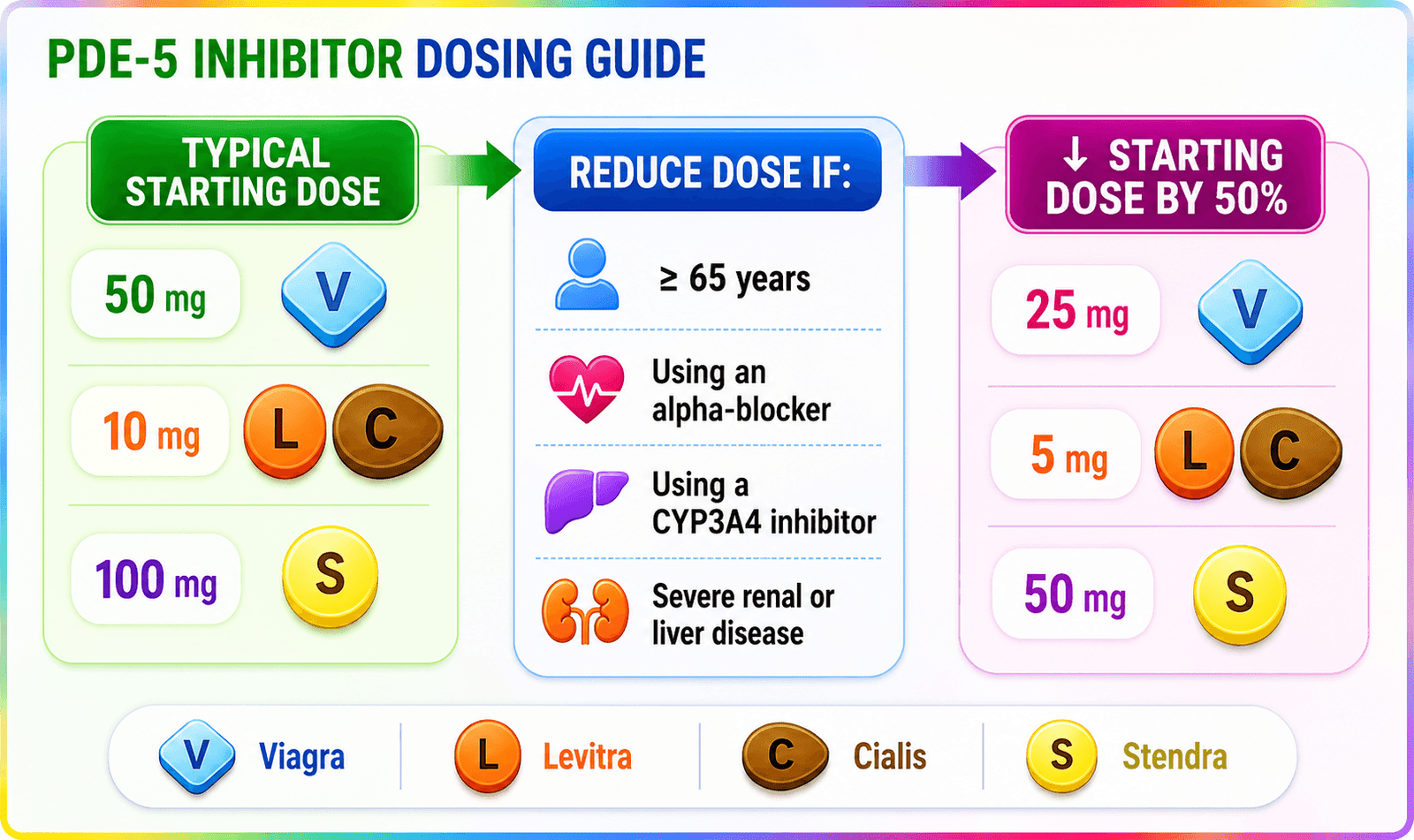
Colorful clinical infographic showing dosing and active ingredients of Viagra (Sildenafil), Levitra (Vardenafil), Cialis (Tadalafil), and Stendra (Avanafil).
Sildenafil (Viagra®) for Erectile Dysfunction
| Parameter | Details |
| Generic name | Sildenafil |
| Brand names | Viagra®, Revatio® (pulmonary arterial hypertension) |
| Drug class | Phosphodiesterase type 5 (PDE-5) inhibitor |
| Licensed indication | Erectile dysfunction (ED); Revatio® is also approved for pulmonary arterial hypertension (PAH). |
| Recommended dose | On-demand: 25–100 mg orally as needed. Standard starting dose: 50 mg approximately 1 hour before sexual activity. Some patients should begin with 25 mg based on age, renal/hepatic impairment, or interacting medicines. |
| Administration | Take once daily when needed. May be taken with or without food. High-fat meals may delay the onset of action. |
| Onset of action | Approximately 30–60 minutes. |
| Duration of action | Around 4–6 hours. |
Contraindications of sildenafil
| Contraindication | Clinical considerations |
| Concomitant nitrate therapy | May cause profound hypotension and is contraindicated. |
| Riociguat | Avoid concurrent use because of the risk of severe hypotension. |
| Hypersensitivity | Do not use in patients with a known allergy to sildenafil or any component of the formulation. |
Warnings and Precautions
| Warning | Clinical significance |
| Hypotension | Use cautiously in patients with low blood pressure, dehydration, or autonomic dysfunction. |
| Priapism | Seek immediate medical attention if an erection lasts longer than 4 hours. |
| Vision changes | Rare cases of non-arteritic anterior ischaemic optic neuropathy (NAION) have been reported. |
| Hearing loss | Sudden hearing loss with or without tinnitus or dizziness has been reported rarely. |
| Cardiovascular disease | Assess cardiovascular fitness before initiating treatment in patients with significant heart disease. |
Long-Term Side Effects of Viagra (Sildenafil)
Side effects of viagra 100 mg |
| Headache |
| Facial flushing |
| Dyspepsia |
| Nasal congestion |
| Dizziness |
| Visual disturbances (blue-tinged vision, blurred vision, increased light sensitivity) |
| Epistaxis |
| Diarrhoea |
| Muscle pain (less common) |
Monitoring
| Parameter | Recommendation |
| Blood pressure | Monitor in patients at risk of hypotension. |
| Erectile response | Assess effectiveness and patient satisfaction. |
| Adverse effects | Ask about visual symptoms, hearing changes, dizziness, and prolonged erections. |
| Cardiovascular symptoms | Evaluate chest pain or worsening cardiac symptoms promptly. |
Patient Counselling
- Take approximately 1 hour before planned sexual activity.
- Sexual stimulation is required for sildenafil to work.
- Avoid taking more than one dose within 24 hours.
- Large or high-fat meals may delay the medicine’s effect.
- Seek urgent medical attention for chest pain, sudden vision loss, hearing loss, or an erection lasting longer than 4 hours.
Tadalafil (Cialis®) for Erectile Dysfunction
Drug Overview
Parameter Details Generic name Tadalafil Brand names Cialis®, Adcirca®, Alyq® Drug class Phosphodiesterase type 5 (PDE-5) inhibitor Licensed indication Erectile dysfunction (ED), benign prostatic hyperplasia (BPH), pulmonary arterial hypertension (PAH). Recommended dose Daily dosing: 2.5–5 mg once daily (start at 2.5 mg). On-demand dosing: 5–20 mg as needed (usual starting dose 10 mg, taken at least 30 minutes before sexual activity). Renal impairment CrCl 30–50 mL/min: 5 mg PRN. CrCl <30 mL/min: 5 mg every 72 hours (PRN). Daily dosing is not recommended in severe renal impairment. Hepatic impairment Avoid daily dosing in severe liver impairment. Administration May be taken with or without food. Onset of action Approximately 30 minutes. Duration of action Up to 36 hours (“the weekend pill”). Contraindications
Contraindication Clinical considerations Concomitant nitrate therapy Contraindicated because of the risk of profound hypotension. Riociguat Do not use concurrently due to severe blood pressure reduction. Hypersensitivity Contraindicated in patients allergic to tadalafil or its ingredients. Warnings and Precautions
Warning Clinical significance Hypotension Increased risk in patients with dehydration, low blood pressure, or autonomic dysfunction. Priapism Emergency medical attention is required if an erection lasts longer than 4 hours. Vision changes Rare cases of NAION have been reported. Hearing loss Sudden hearing loss or tinnitus has been reported rarely. Cardiovascular disease Assess cardiovascular status before treatment. Renal impairment Dose adjustment is required in moderate to severe renal impairment. Hepatic impairment Use cautiously in patients with liver disease. Common Side Effects
Very common/Common adverse effects Headache Flushing Dyspepsia Nasal congestion Back pain Muscle pain (myalgia) Dizziness Limb pain Monitoring
Parameter Recommendation Blood pressure Monitor for hypotension. Treatment response Assess improvement in erectile function. Adverse effects Monitor for visual disturbances, hearing loss, dizziness, and prolonged erections. Renal and liver function Consider periodic review in patients with impairment. Patient Counselling
- May be taken with or without food.
- Daily and on-demand dosing should not be used together.
- Sexual stimulation is required for effectiveness.
- Do not exceed one dose per day.
- Seek urgent medical attention for chest pain, sudden vision or hearing loss, or an erection lasting longer than 4 hours.
Vardenafil (Levitra®, Staxyn®) for Erectile Dysfunction
Drug Overview
Parameter Details Generic name Vardenafil Brand names Levitra®, Staxyn® Drug class Phosphodiesterase type 5 (PDE-5) inhibitor Licensed indication Erectile dysfunction (ED). Recommended dose 5–20 mg orally as needed. Standard starting dose: 10 mg, approximately 1 hour before sexual activity. Administration May be taken with or without food. High-fat meals may delay absorption. Staxyn® is an orally disintegrating tablet (ODT) available only as 10 mg. Onset of action Approximately 30–60 minutes. Duration of action Approximately 4–6 hours. Contraindications
Contraindication Clinical considerations Nitrate therapy Contraindicated because of severe hypotension risk. Riociguat Concurrent use is contraindicated. Hypersensitivity Avoid in patients with allergy to vardenafil. Warnings and Precautions
Warning Clinical significance QT interval prolongation Avoid in patients with congenital long QT syndrome or those taking Class IA or Class III antiarrhythmic drugs. Hypotension Use cautiously in patients with low blood pressure. Priapism Seek emergency care for erections lasting more than 4 hours. Vision changes Rare reports of NAION. Hearing loss Rare cases of sudden hearing loss have been reported. Common Side Effects
Very common/Common adverse effects Headache Flushing Nasal congestion Dyspepsia Dizziness Rhinitis Monitoring
Parameter Recommendation Blood pressure Monitor if clinically indicated. Cardiac status Assess cardiovascular risk before treatment. Adverse effects Monitor for vision changes, hearing loss, dizziness, and priapism. Patient Counselling
- Take approximately 1 hour before sexual activity.
- Avoid taking more than one dose in 24 hours.
- High-fat meals may reduce effectiveness.
- Seek urgent medical attention if an erection lasts more than 4 hours.
Avanafil (Stendra®) for Erectile Dysfunction
Drug Overview
Parameter Details Generic name Avanafil Brand name Stendra® Drug class Phosphodiesterase type 5 (PDE-5) inhibitor Licensed indication Erectile dysfunction (ED). Recommended dose 50–200 mg orally as needed. Standard starting dose: 100 mg, taken 15–30 minutes before sexual activity. Some patients may start with 50 mg depending on clinical factors. Administration May be taken with or without food. Onset of action Approximately 15–30 minutes. Duration of action Up to 6 hours. Contraindications
Contraindication Clinical considerations Nitrate therapy Contraindicated because of severe hypotension risk. Riociguat Do not use concurrently. Hypersensitivity Contraindicated in patients allergic to avanafil. Warnings and Precautions
Warning Clinical significance Hypotension Use cautiously in patients predisposed to low blood pressure. Priapism Immediate medical treatment is required for prolonged erections. Vision changes Rare reports of NAION have occurred. Hearing loss Sudden hearing loss has been reported rarely. Cardiovascular disease Evaluate cardiovascular fitness before prescribing. Common Side Effects
Very common/Common adverse effects Headache Flushing Nasal congestion Back pain Dizziness Monitoring
Parameter Recommendation Blood pressure Monitor patients at risk of hypotension. Treatment response Review symptom improvement and tolerability. Adverse effects Assess for vision changes, hearing loss, and priapism. Patient Counselling
- Take 15–30 minutes before sexual activity.
- Sexual stimulation is necessary for the medicine to work.
- Do not exceed one dose in 24 hours.
- Seek urgent medical attention for chest pain, sudden vision or hearing loss, or an erection lasting longer than 4 hours.
Comparison Table
| Feature | Sildenafil | Tadalafil | Vardenafil | Avanafil |
| Typical starting dose | 50 mg | 10 mg | 10 mg | 100 mg |
| Onset of action | 30–60 min | 30–60 min | 30–60 min | 15–30 min |
| Duration | 4–6 hours | Up to 36 hours | 4–6 hours | Up to 6 hours |
| Daily dosing available | No | Yes | No | No |
| Effect of high-fat meal | May delay onset | Minimal effect | May delay onset | Minimal effect |
| Also approved for | PAH | BPH, PAH | — | — |
Addressing Female Sexual Dysfunction: Diagnostic and Treatment Options
Etiology and Pathophysiology
Neuroendocrine Regulation: Sexual desire and arousal are regulated by hormonal changes and brain activity, particularly involving the hypothalamus and limbic system (Brotto et al., 2005).
Vascular Response: During sexual arousal, increased blood flow to the clitoris and vaginal tissues is essential for lubrication and engorgement (Krychman et al., 2011).
Key Factors in FSD
Clinical Presentation:
- HSDD (Hypoactive Sexual Desire Disorder): Characterized by a persistent lack of sexual desire (Meston et al., 2006).
- FSAD (Female Sexual Arousal Disorder): Issues with lubrication or genital engorgement (Nurnberg et al., 2006).
- Anorgasmia: Difficulty or inability to achieve orgasm (Brotto et al., 2006).
- Dyspareunia and Vaginismus: Pain during intercourse or involuntary vaginal contractions (Cork et al., 2002).
Diagnostic Criteria
Detailed Medical and Psychosocial History: Information about medical conditions, medications, and psychological factors is critical for diagnosing FSD (Meston et al., 2006).
Laboratory Tests:
- Hormonal Assessments: Include testosterone, estrogen, and prolactin levels (Miller et al., 2002).
- Thyroid Function Tests: Evaluate thyroid disorders that can affect sexual function (Melmed et al., 2005).
Pharmacological and Non-Pharmacological Treatment Options
| Treatment | Indications | Notes/Safety Considerations |
|---|---|---|
| Flibanserin | Hypoactive Sexual Desire Disorder (HSDD) | – Daily oral administration. – Side effects: dizziness, nausea, fatigue. – Avoid alcohol. |
| Bremelanotide | Hypoactive Sexual Desire Disorder (HSDD) | – Intranasal or subcutaneous use. – Side effects: nausea, headache, flushing. – Monitor for allergic reactions. |
| Testosterone Therapy | Low libido in women | – Available in gels, patches, and injections. – Monitor for virilization and testosterone levels. – Regular follow-up is required. |
| SSRIs (e.g., Sertraline) | Sexual dysfunction related to anxiety | – Low-dose daily for men with premature ejaculation or sexual dysfunction related to anxiety. – Side effects: decreased libido, delayed orgasm. |
| Vaginal Estrogen Therapy | Vaginal dryness and atrophy due to menopause | – Effective for improving lubrication and comfort. – Side effects: local irritation. |
Frequently Asked Questions (FAQs) – Sexual Dysfunction
1. What is sexual dysfunction?
Sexual dysfunction refers to problems that affect a person’s ability to experience sexual desire, arousal, orgasm, or satisfaction. It can occur in both men and women and may result from physical health conditions, psychological factors, relationship issues, or medications.
2. What is the classification of sexual dysfunction?
Sexual dysfunction is commonly classified into four main categories:
- Sexual desire disorders – reduced libido or lack of sexual interest
- Sexual arousal disorders – difficulty becoming physically aroused, including erectile dysfunction
- Orgasm disorders – delayed orgasm, inability to orgasm, or premature ejaculation
- Sexual pain disorders – pain during sexual activity, such as dyspareunia
3. What is erectile dysfunction?
Erectile dysfunction (ED) is the inability to achieve or maintain an erection that is firm enough for satisfactory sexual activity. It may occur due to physical conditions, psychological factors, lifestyle factors, or medication effects.
4. What causes erectile dysfunction?
Erectile dysfunction can be caused by:
- Cardiovascular disease
- Diabetes
- High blood pressure
- Obesity
- Low testosterone levels
- Neurological disorders
- Stress, anxiety, or depression
- Certain medications
5. What does erection mean?
An erection is the process where the penis becomes firm and enlarged due to increased blood flow into erectile tissues. It is a normal physiological response involved in sexual arousal.
6. What is an erection?
An erection is a temporary increase in penile firmness caused by relaxation of blood vessels and increased blood flow into the erectile tissue. It occurs through a combination of nervous system, hormonal, and vascular processes.
7. What are erection problems?
Erection problems refer to difficulties achieving or maintaining an erection. Occasional problems may occur due to stress or tiredness, but persistent erection problems may indicate erectile dysfunction and require medical assessment.
8. What is female sexual dysfunction?
Female sexual dysfunction may occur due to several factors, including difficulty reaching orgasm (anorgasmia), painful intercourse (dyspareunia), or reduced sexual desire known as hypoactive sexual desire disorder (HSDD).
For premenopausal women with acquired, generalized HSDD, two medications are FDA-approved: flibanserin (Addyi) and bremelanotide (Vyleesi). These treatments aim to improve sexual desire but are only suitable for selected patients after assessment by a healthcare professional.
1. Flibanserin (female Viagra) tablets price: branded Addyi costs $149 to $400 per month.
2. Bremelanotide (Vyleesi) – Unlike PDE5 inhibitors such as sildenafil (Viagra) and tadalafil (Cialis), which enhance erectile function by increasing blood flow through peripheral vascular effects, PT-141 (bremelanotide) works through a central mechanism in the brain. It activates melanocortin receptors, particularly MC3 and MC4 receptors, within the central nervous system. This stimulation influences neural pathways involved in sexual motivation, arousal, and desire, helping to enhance sexual interest and responsiveness.
Off-Label Uses for Men
- Hypoactive Sexual Desire Disorder (HSDD): Decreased libido or lack of interest in sex.
- Erectile Dysfunction (ED): Particularly for individuals who have not responded adequately to standard PDE-5 inhibitors (like Viagra).
- Psychogenic ED: Erectile issues stemming from performance anxiety or stress rather than purely physical or vascular restrictions. [1, 2]
- Improved Sexual Response: Research demonstrates statistically significant improvements in erection rigidity, duration, and overall intercourse satisfaction. [1, 2]
- Combination Efficacy: Early studies suggest it can work synergistically to boost erectile responses when co-administered alongside a PDE-5 inhibitor. [1, 2]
- Spontaneous Action: Unlike PDE-5 inhibitors that require physical sexual stimulation to initiate an erection, bremelanotide can trigger erections centrally without external stimulation. [1]
- Nausea and Vomiting: This is the most common transient issue, frequently occurring shortly after administration. [1, 2]
- Flushing and Headaches: Mild to moderate facial flushing and head pain are frequently noted. [1, 2]
- Prolonged or Spontaneous Erections: Some clinical data has shown men experiencing persistent or bothersome spontaneous erections lasting anywhere from several hours up to 24 hours. [1, 2]
- Blood Pressure Increases: Bremelanotide can cause temporary increases in blood pressure. Consequently, it is strictly contraindicated for anyone with a history of cardiovascular disease or uncontrolled hypertension. [1, 2, 4]
9. What is male sexual dysfunction?
Male sexual dysfunction includes problems affecting sexual desire, erection, ejaculation, or orgasm. Common examples include erectile dysfunction, low libido, premature ejaculation, and delayed ejaculation.
10. What is libido?
Libido refers to a person’s sexual desire or interest in sexual activity. Libido can vary between individuals and may be influenced by hormones, mental health, relationships, lifestyle, and medications.
11. What causes low libido?
Low libido may occur due to:
- Stress and anxiety
- Depression
- Relationship difficulties
- Low testosterone
- Age-related hormonal changes
- Chronic illnesses
- Certain medicines, including some antidepressants
12. What is impotence?
Impotence is an older term commonly used to describe erectile dysfunction. It refers to difficulty achieving or maintaining an erection suitable for sexual activity. Healthcare professionals now usually use the term erectile dysfunction (ED).
13. What is SSRI sexual dysfunction?
SSRI sexual dysfunction refers to sexual side effects caused by selective serotonin reuptake inhibitors (SSRIs), a group of medicines commonly used to treat depression and anxiety disorders.
Symptoms may include:
- Reduced libido
- Difficulty achieving orgasm
- Delayed ejaculation
- Erectile dysfunction
- Reduced sexual satisfaction
14. Why do SSRIs cause sexual dysfunction?
SSRIs may cause sexual dysfunction because they increase serotonin activity in the brain, which can reduce dopamine and other pathways involved in sexual desire, arousal, and orgasm.
15. Can ADHD cause sexual dysfunction?
Yes, ADHD can be associated with sexual dysfunction. Factors such as impulsivity, difficulty maintaining attention, emotional regulation problems, and medication effects may influence sexual desire and sexual performance.
16. What is ADHD and sexual dysfunction?
ADHD and sexual dysfunction are linked through changes in attention, reward pathways, impulsivity, and emotional regulation. Some people with ADHD may experience changes in libido, sexual satisfaction, or relationship-related sexual difficulties.
17. What is agomelatine?
Agomelatine is an antidepressant that works mainly on melatonin receptors and serotonin pathways. It may have fewer sexual side effects compared with some SSRIs, although suitability depends on individual factors and should be discussed with a healthcare professional.
18. Can sexual dysfunction be treated?
Yes, sexual dysfunction can often be treated depending on the underlying cause. Treatment options may include lifestyle changes, psychological therapies, medication adjustments, and specific treatments such as erectile dysfunction medicines.
19. Can erectile dysfunction be treated?
Yes, erectile dysfunction can be effectively managed with treatments such as:
- Lifestyle modifications
- Psychological support
- PDE-5 inhibitors (for example sildenafil and tadalafil)
- Treatment of underlying medical conditions
20. Is sexual dysfunction common?
Yes, sexual dysfunction is common and can affect people of all ages. It may occur due to ageing, health conditions, psychological factors, relationship issues, or medication use.
21. When should I seek medical advice for erection problems?
You should seek medical advice if erection problems:
- Persist for several weeks or months
- Affect your relationships or quality of life
- Occur suddenly
- Are associated with symptoms of cardiovascular disease or other health problem
21. What is erection / erection meaning?
An erection is the physiological process where erectile tissue fills with blood and becomes firm, enlarged, and elevated. While the term most commonly refers to a penile erection, the clitoris and other genital tissues can also experience erections. It is a completely natural body function controlled by a combination of your nervous and cardiovascular systems
**Disclaimer**: The information in this article is intended for informational purposes only and should not be considered medical advice. Always consult a healthcare professional for diagnosis and treatment of medical conditions.


19 Comments