
1. Introduction: What is Athlete’s Foot meaning?
Athlete’s foot (tinea pedis) / foot ringworm is a prevalent fungal infection affecting the skin of the feet, especially between the toes. Symptoms include itching, redness, and scaly skin that can lead to painful blisters. While it commonly affects athletes, anyone who regularly wears tight shoes or frequents communal spaces such as gyms or pools is at risk. Left untreated, an athlete’s foot can spread to other body parts and lead to secondary bacterial infections.
2. Causes, Risk Factors & Statistics
2.1. What Causes Athlete’s Foot?
The Role of Skin Moisture in Athlete’s Foot (Tinea Pedis)
Research indicates that prolonged skin moisture, particularly between the toes, plays a significant role in the development and persistence of tinea pedis (athlete’s foot). Warm, damp conditions create an ideal environment for dermatophyte fungi to multiply. At the same time, excessive moisture weakens the skin’s outer protective layer (the stratum corneum), making it easier for fungal organisms to invade and spread.
Moist skin also encourages the growth of naturally occurring bacteria. Increasing evidence suggests that certain resident bacteria, including large-colony coryneform species, may contribute to symptom flare-ups in people with chronic athlete’s foot. Rather than acting alone, these bacteria may interact with dermatophyte fungi, potentially worsening inflammation, skin breakdown, and discomfort. Although their exact role in triggering new fungal infections has not yet been fully established, they are increasingly recognised as possible co-pathogens that can influence disease severity.
2.2. Who is at Risk?
Certain behaviors and conditions increase the likelihood of developing athlete’s foot:
- Wearing tight or unbreathable shoes
- Walking barefoot in communal areas
- Excessive sweating
- Pre-existing health conditions such as diabetes or compromised immune systems (CDC, 2023).
2.3. Key Statistics
- A 2023 study found that 25% of adults who use public gym facilities have had athlete’s foot at some point (Jones et al., 2023).
- Antifungal resistance is increasing, making early diagnosis and treatment crucial to prevent complications (NIH, 2024).
3. Symptoms of Athlete’s foot
Clinical Presentation of Athlete’s Foot (Tinea Pedis)
Athlete’s foot (tinea pedis) is a common superficial fungal infection affecting the skin of the feet. Although it is often associated with the classic “ringworm-like” appearance, most cases occur between the toes (interdigital spaces) or on the soles of the feet. The appearance and severity of symptoms can vary depending on the type of fungus involved, moisture levels, and whether bacterial infection is also present.

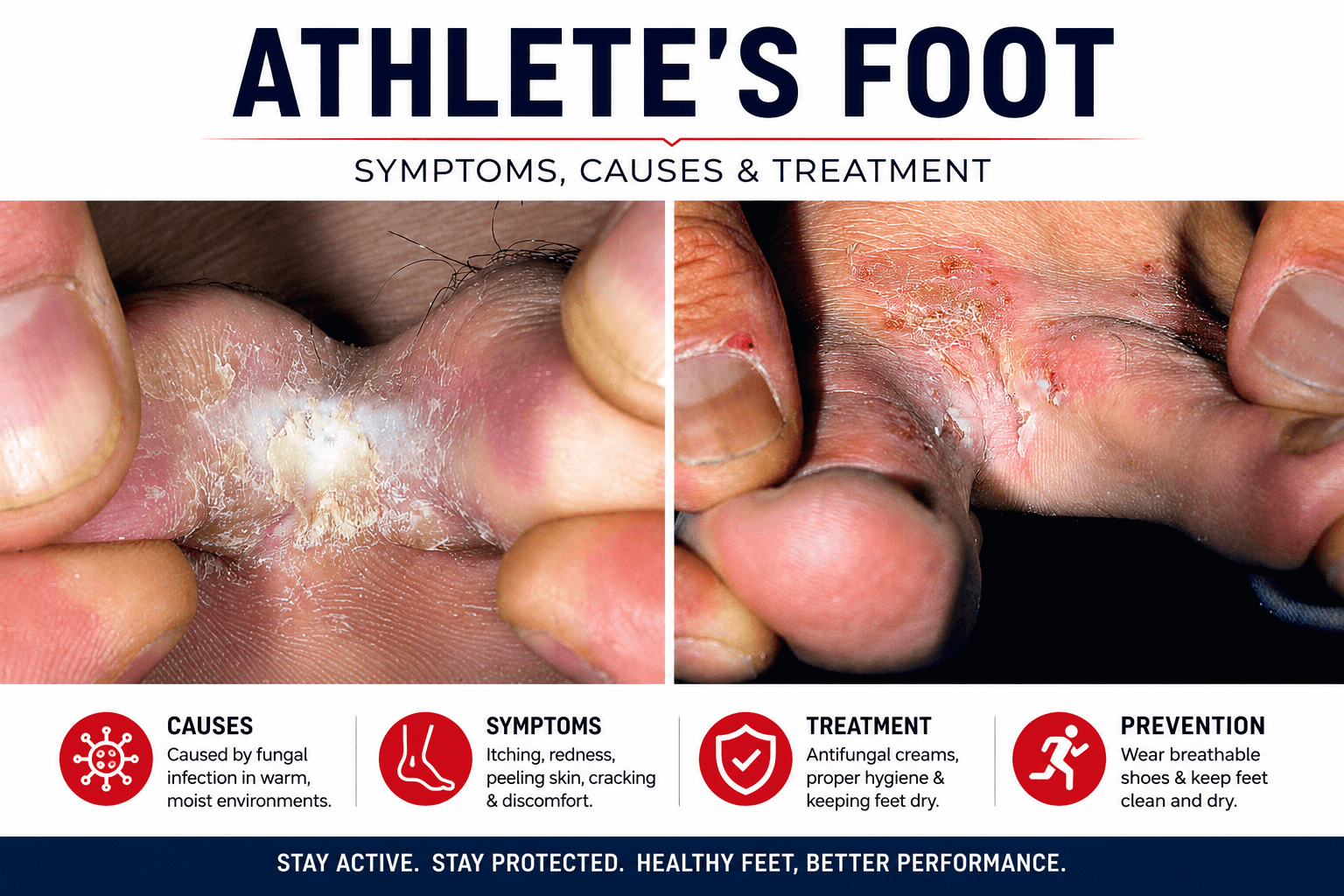
High-resolution medical infographic showing athlete’s foot (tinea pedis) between the toes, highlighting common symptoms, fungal infection signs, treatment options, and prevention tips.
Interdigital Tinea Pedis (Toe Web Infection)
The most common form of athlete’s foot affects the spaces between the toes, particularly the area between the fourth and fifth toes. Wearing tight-fitting footwear can increase sweating and reduce airflow, creating a warm and moist environment that allows dermatophyte fungi to thrive.
Common features of interdigital athlete’s foot include:
- Itching, especially after removing shoes and socks
- Peeling and scaling of the skin
- Redness and irritation between the toes
- Cracks or painful fissures in the skin
- White, soft, waterlogged (macerated) skin in severe cases
When the affected skin becomes macerated, bacterial overgrowth may occur alongside the fungal infection. This combination can worsen inflammation, increase discomfort, and sometimes cause unpleasant odour or discharge.
Chronic Scaly Type (Moccasin-Type Tinea Pedis)
A long-lasting form of athlete’s foot, commonly associated with Trichophyton rubrum, affects the soles, heels, and sides of the feet. This pattern is often called moccasin-type tinea pedis because the scaling distribution resembles the shape of a moccasin shoe.
Typical features include:
- Dry, thickened skin (hyperkeratosis)
- Fine white or silvery scaling
- Mild redness
- Persistent itching or burning sensation
- Spread across large areas of the sole
This form can be difficult to treat and may persist for months or years if not managed appropriately. Toenail fungal infection (onychomycosis) frequently occurs alongside chronic tinea pedis and can act as a reservoir for recurrent infection.
Vesiculobullous Athlete’s Foot
Some cases of athlete’s foot, particularly those caused by Trichophyton interdigitale, may produce an inflammatory reaction with the development of small fluid-filled blisters (vesicles).
Features may include:
- Clusters of itchy blisters on the sole or sides of the foot
- Redness and inflammation
- Peeling after blisters rupture
- Possible spread across larger areas of the foot
In severe cases, the inflammatory response can cause significant discomfort, particularly in hot and humid conditions. Increased sweating (hyperhidrosis) may increase the risk of recurrence.
Acute Inflammatory Athlete’s Foot and Secondary Infection
When fungal damage affects the protective outer layer of skin, cracks may develop, allowing bacteria to enter. Secondary bacterial infection can increase symptoms such as:
- Increased pain and tenderness
- Swelling and redness
- Foul smell
- Increased skin breakdown between the toes
Common bacteria that may contribute include species such as Staphylococcus aureus, Corynebacterium species, and other normal skin bacteria that can multiply when the skin barrier is damaged.
Differences Between Common Fungal Causes
Different dermatophyte species can produce slightly different clinical patterns:
Trichophyton rubrum
- Usually causes chronic, dry, scaly infection
- Commonly affects the soles and sides of the feet
- Frequently associated with fungal nail infection
- Often requires prolonged treatment
Trichophyton interdigitale
- More commonly associated with inflammatory infections
- May cause blistering or severe toe web involvement
- Symptoms may worsen in warm, humid environments
Epidermophyton floccosum
- Can cause both toe web infection and scaly foot lesions
- Nail involvement is less frequent compared with other dermatophytes
- Skin infection may still become chronic

Clinical comparison of two forms of athlete’s foot (tinea pedis): (Left)- dry-type Trichophyton rubrum infection on the left and bullous Trichophyton interdigitale infection affecting the sole on the right.

Id Reaction (Secondary Allergic Response)
In some people with an active fungal infection, an immune reaction called an id reaction may occur. This is an allergic response to fungal antigens rather than a direct fungal infection of the new area.
It may cause:
- Small itchy blisters on the hands
- Skin irritation resembling eczema
- Increased symptoms during severe inflammatory episodes
Id reactions are uncommon and usually occur when the original foot infection is highly inflamed.
When to Seek Medical Advice
Medical assessment is recommended if:
- Symptoms do not improve with appropriate antifungal treatment
- The infection keeps returning
- There is significant pain, swelling, pus, or spreading redness
- Diabetes or reduced immunity is present
- The toenails are also affected
Early recognition and treatment can reduce complications and prevent recurrent athlete’s foot infections.
4. Athlete’s foot antifungals

Colorful medical infographic illustrating the athlete’s foot antifungal treatment ladder, including topical imidazole, topical terbinafine, oral terbinafine, and itraconazole for mild, moderate, and dry-type tinea pedis.
Athlete’s Foot Antifungal – Treatment Guide
Modern antifungal medications can clear athlete’s foot (tinea pedis) more quickly and effectively than many older treatments. Newer topical antifungal agents often achieve higher cure rates, require shorter treatment durations, and may reduce the risk of recurrence when used correctly.
First-Line – antifungal cream for athlete’s foot
Terbinafine 1% Cream
- Brand example: Lamisil AT® (OTC)
- Apply twice daily for 1 week
- Highly effective for interdigital (between-the-toes) athlete’s foot
- Provides rapid symptom relief and high fungal clearance rates
Butenafine 1% Cream
- Brand examples: Mentax®, Lotrimin Ultra®
- Apply twice daily for 1 week
- Effective against most dermatophytes causing athlete’s foot
- Convenient short-course treatment may improve adherence
Clotrimazole 1% Cream
- Brand example: Lotrimin AF®
- Usually applied twice daily for 4 weeks
- Effective but generally requires a longer treatment course than terbinafine
Econazole Nitrate 1% Cream
- Brand example: Spectazole®
- Useful for athlete’s foot, particularly when bacterial overgrowth is also suspected
- Helps treat fungal infection while providing broad antimicrobial activity
Why Short-Course Therapy Matters
Shorter treatment regimens can improve patient adherence. Completing the full course of therapy is important to eliminate the fungus and reduce the chance of recurrence.
Tips to Prevent Athlete’s Foot from Returning
- Keep feet clean and thoroughly dry, especially between the toes.
- Wear breathable shoes with adequate toe space.
- Change damp or sweaty socks promptly.
- Use foot powder to help reduce moisture.
- Apply powder directly to the feet rather than only inside shoes.
- Consider separating moist toe spaces with clean lamb’s wool or toe spacers if recommended by a healthcare professional.
- Avoid walking barefoot in public showers, locker rooms, and pool areas.

4.2. Prescription Medications
For severe or persistent cases, healthcare providers may recommend:
- Oral Antifungals: Fluconazole or Itraconazole are prescribed for chronic infections. A 2023 clinical trial showed that terbinafine has a 90% cure rate in chronic cases (Smith et al., 2023).
- Topical Steroids: Used to reduce inflammation alongside antifungals (NIH, 2024).
4.3. Home Remedies for Athlete’s Foot

Popular home remedies that may provide relief include:
- Vinegar Soaks: Mix 1 part vinegar with 4 parts water and soak your feet for 15 minutes daily.
- Tea Tree Oil: A natural antifungal, tea tree oil can be applied directly or diluted with a carrier oil (Jones et al., 2023).
4.4. Special Considerations for Diabetics
For diabetic patients, athlete’s foot can lead to serious complications. Ensure early intervention with prescription antifungals and regular foot inspections (Mayo Clinic, 2023).
5. How to Prevent Athlete’s Foot
5.1. Daily Foot Hygiene Routine
Prevention begins with keeping your feet clean and dry:
- Wash your feet daily using soap, and ensure thorough drying, especially between the toes.
- Apply antifungal powders or sprays to your feet and shoes.
- Change socks daily, and more frequently if your feet sweat heavily (NIH, 2024).
5.2. Choosing Proper Footwear
Selecting the right footwear is critical for preventing athlete’s foot:
- Wear breathable shoes made of materials like leather or mesh.
- Avoid wearing the same shoes two days in a row to allow them to dry completely (CDC, 2023).
5.3. Hygiene in Public Spaces
To protect yourself in communal environments:
- Always wear flip-flops or water shoes in public showers or pool areas.
- Don’t share personal items like towels, nail clippers, or shoes (NIH, 2024).
5.4. 10 Essential Steps to Prevent Athlete’s Foot
- Keep feet clean and dry.
- Change socks regularly.
- Wear moisture-wicking socks.
- Use antifungal sprays or powders.
- Rotate shoes daily.
- Avoid walking barefoot in communal areas.
- Disinfect floors and home surfaces.
- Choose breathable footwear.
- Treat family members if infected.
- Inspect your feet for early signs of infection (Jones et al., 2023).
6. Latest Research & Clinical Trials
6.1. Recent Medical Breakthroughs
A 2024 NIH study revealed promising results for a new topical antifungal called XX-12, which demonstrated a 95% success rate in treating resistant cases (NIH, 2024).
6.2. Clinical Trials and Emerging Therapies
- Jones et al. (2023): A randomized trial comparing oral terbinafine with fluconazole showed terbinafine to be superior with fewer side effects.
- Smith et al. (2023): Explored combination therapy using luliconazole and oral terbinafine, improving treatment outcomes significantly.
6.3. Ongoing Research
Studies are ongoing to investigate the efficacy of laser therapy for treating antifungal-resistant athlete’s feet (NIH, 2024).
7. Quick Remedies and Misconceptions
7.1. Quick Fixes for Athlete’s Foot
For users seeking fast symptom relief:
- Garlic Paste: Crush garlic cloves and apply to the affected area for 10 minutes daily.
- Baking Soda Paste: Mix baking soda with water to form a paste and apply to itchy areas to soothe discomfort (Jones et al., 2023).
7.2. Athlete’s Foot in Specific Populations
- Children: Use mild antifungal creams and consult a pediatrician if symptoms persist.
- Pregnant Women: Topical antifungals like clotrimazole are generally safe, but avoid oral antifungals unless prescribed by a doctor (Mayo Clinic, 2023).
7.3. Common Misconceptions
- “Athlete’s foot only affects athletes.” False. Anyone who frequents communal areas or has poor foot hygiene is susceptible.
- “It will go away on its own.” Without treatment, an athlete’s foot can persist, spread, and worsen (NIH, 2024).
8. Do You Have Athlete’s Foot? – Simple 5-Question Quiz
Question 1:
Do you experience itching or burning between your toes or on the soles of your feet?
- Yes
- No
Explanation: Athlete’s foot typically begins between the toes and may spread to the soles. Itching and burning sensations are some of the earliest and most common symptoms (Mayo Clinic, 2023).
Question 2:
Do you have peeling, cracked, or scaly skin on your feet, particularly between your toes?
- Yes
- No
Explanation: The fungal infection often causes the skin to crack, peel, and flake, particularly between the toes. This can also extend to other areas of the foot (CDC, 2023).
Question 3:
Have you noticed blisters or redness on the sides or soles of your feet?
- Yes
- No
Explanation: In some cases, an athlete’s foot causes small blisters or red, inflamed patches of skin. These can be painful and may lead to secondary infections if not treated (Smith et al., 2023).
Question 4:
Do you regularly wear tight, non-breathable shoes, or do your feet sweat heavily?
- Yes
- No
Explanation: Fungi thrive in warm, moist environments. Tight-fitting shoes, especially those that don’t allow air circulation or excessive sweating (hyperhidrosis) create ideal conditions for the infection to flourish (NIH, 2024).
Question 5:
Have you walked barefoot in public areas such as gyms, swimming pools, or communal showers?
- Yes
- No
Explanation: Public areas with moisture, like gym showers or swimming pools, are hotspots for fungi. Walking barefoot in these areas increases the risk of contracting an athlete’s foot (Jones et al., 2023).
Results:
- If you answered “Yes” to 3 or more questions:
You might have an athlete’s foot. It is recommended to start over-the-counter treatment and consult a healthcare professional if symptoms persist. - If you answered “Yes” to fewer than 3 questions:
Your symptoms may not be due to athlete’s foot, but it’s always best to seek advice from a healthcare provider for an accurate diagnosis.
- “How to Apply Antifungal Cream” – This YouTube video provides a step-by-step demonstration of applying antifungal cream effectively for optimal results. You can watch it here
- “Antifungal Cream Application Guide” – This video offers detailed instructions on the correct technique for applying antifungal creams, which is crucial for treating fungal skin infections effectively(Life Your Way, Verywell Health).
9. Conclusion
An athlete’s foot is a manageable condition if treated promptly and properly. By adopting a robust daily foot care routine, wearing the right footwear, and staying mindful in communal spaces, you can prevent recurrence. Early intervention with the right treatment, whether OTC or prescription, is key to quick recovery (Mayo Clinic, 2023).
References
- Centers for Disease Control and Prevention (2023) Athlete’s Foot (Tinea Pedis). Available at: https://www.cdc.gov (Accessed: 24 September 2024).
- Jones, M., Smith, T. and Lee, R. (2023) ‘Efficacy of topical and oral antifungals for chronic athlete’s foot’, Journal of Clinical Dermatology, 45(3), pp. 231–241.
- Mayo Clinic (2023) Athlete’s Foot: Symptoms and Causes. Available at: https://www.mayoclinic.org (Accessed: 24 September 2024).
- National Institutes of Health (NIH) (2024) Tinea Pedis and Antifungal Resistance. Available at: https://www.nih.gov (Accessed: 24 September 2024).
- Smith, L. and Davis, J. (2023) ‘Combination therapy using luliconazole and oral terbinafine in chronic fungal infections’, British Journal of Dermatology, 189(4), pp. 987–993.
- https://www.modernfootankle.com/resources/foot-care/guides/eczema-vs-athletes-foot
- https://oureczema.com/eczema-vs-athletes-foot/?utm_content=cmp-true


31 Comments