
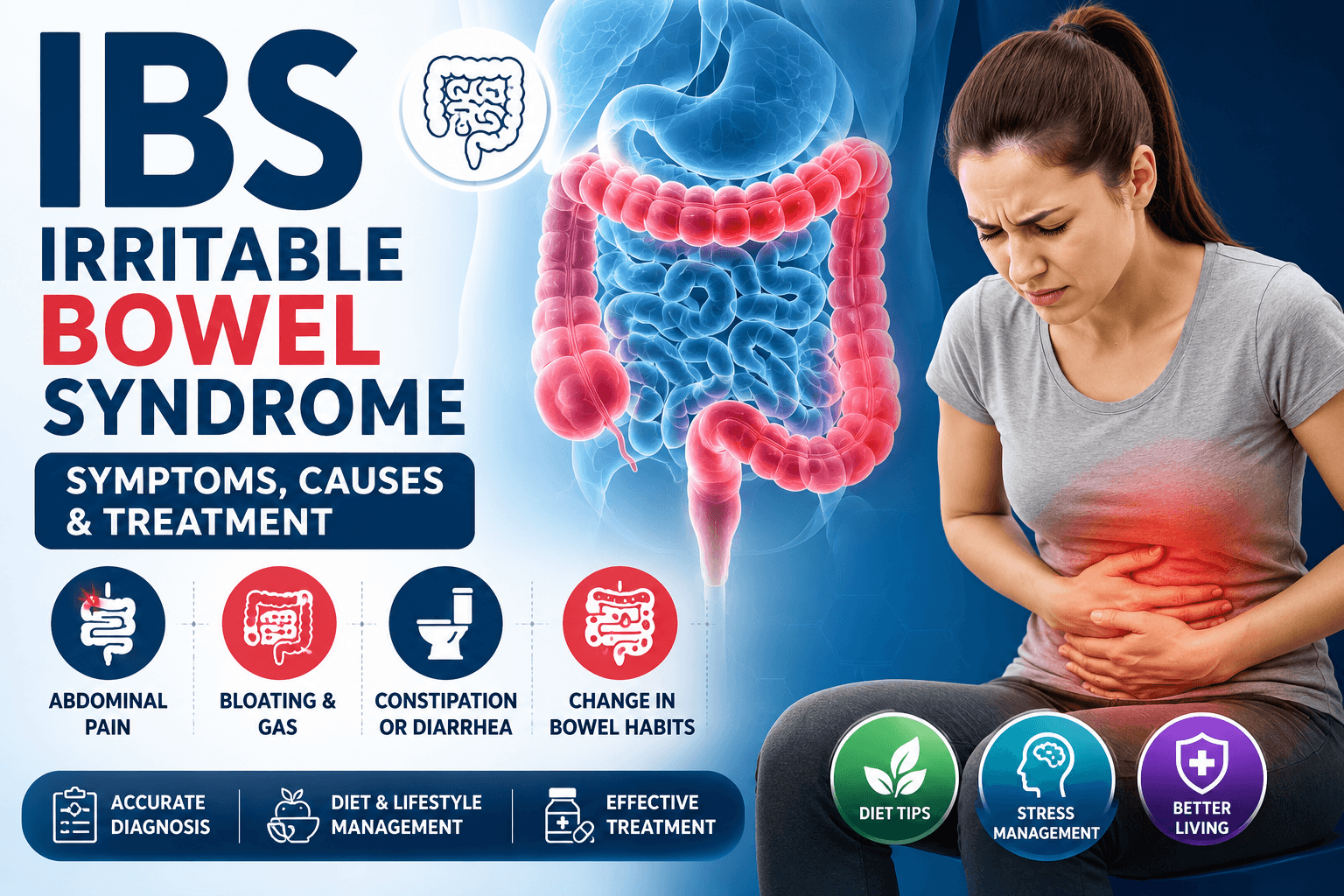
IRRITABLE BOWEL SYNDROME (IBS) – Symptoms & Treatment
irritable bowel disease
irritable bowel syndrome symptoms
irritable bowel syndrome diet
Definition of IRRITABLE Bowel Syndrome:
IBS can be defined as a functional bowel disorder characterized by abdominal pain associated with a change of bowel habit.
IBS Symptoms and Diagnosis: How Irritable Bowel Syndrome is Diagnosed (Easy Guide)
What Are the of Irritable Bowel Syndrome (IBS) Symptoms ?
Irritable Bowel Syndrome (IBS) is a common functional gastrointestinal disorder that affects the way the digestive system works. Unlike inflammatory bowel diseases, IBS does not cause permanent damage to the intestines, but it can significantly affect daily life.
The hallmark symptoms of IBS include:
- Recurrent abdominal pain or discomfort
- Changes in bowel habits (diarrhea, constipation, or both)
- Pain associated with bowel movements (defecation)
- Abdominal bloating or a feeling of fullness (common but not essential for diagnosis)
Key Point: No single symptom alone is enough to diagnose IBS. Doctors diagnose IBS by evaluating a combination of symptoms while excluding other digestive diseases.
Irritable Bowel Syndrome Symptoms
Patients with IBS may experience one or more of the following symptoms:
- Recurrent abdominal pain or cramping
- Abdominal bloating and excessive gas
- Diarrhea (IBS-D)
- Constipation (IBS-C)
- Alternating diarrhea and constipation (IBS-M)
- Urgency to pass stools
- Feeling of incomplete bowel emptying
- Mucus in the stool (occasionally)
Symptoms often come and go and may worsen during periods of stress, anxiety, or after certain foods.

NICE-guided IBS diagnostic pathway highlighting alarm features, coeliac disease screening, initial investigations, and first-line management based on UK clinical guidelines.
Characteristics of IBS Abdominal Pain
Abdominal pain is the most important symptom of IBS.
Typical features include:
- Usually located in the lower abdomen
- May occur anywhere in the abdomen
- Can sometimes spread to the back or chest
- Frequently improves after passing stool
- Often accompanied by changes in stool frequency or stool consistency
The pain commonly becomes worse during:
- Emotional stress
- Anxiety
- Major life events
- Certain dietary triggers
Pain Less Likely to Be IBS
Pain is less likely to be caused by IBS if it is:
- Constant throughout the day
- Completely unrelated to bowel movements
- Triggered only by menstruation
- Triggered by urination
- Caused by physical activity or exercise
These symptoms may indicate another medical condition and require further evaluation.
How Is IBS Diagnosed?
There is no single blood test, stool test, or imaging scan that confirms IBS.
Instead, healthcare providers make a positive clinical diagnosis using symptom-based criteria while ruling out warning signs of other diseases.
Several diagnostic criteria have been developed over the years.
1. Manning Criteria
The Manning Criteria were among the earliest symptom-based tools developed for diagnosing IBS.
The following features are commonly seen in IBS patients:
- Pain relieved after a bowel movement
- Looser stools when abdominal pain begins
- More frequent bowel movements when pain starts
- Visible abdominal bloating or distension
- Feeling of incomplete bowel emptying
- Passage of mucus in stool
Research has shown that these criteria are fairly specific for IBS, although they may miss some patients. They tend to perform better in women than in men.
2. Kruis Scoring System
Kruis Criteria for IBS (Irritable Bowel Syndrome)
The Kruis Criteria is a clinical scoring system developed to help healthcare professionals distinguish Irritable Bowel Syndrome (IBS) from organic gastrointestinal diseases. It combines the patient’s symptoms, physical examination findings, and simple laboratory tests to improve diagnostic accuracy while reducing unnecessary investigations.
Unlike symptom-only criteria, the Kruis Criteria also considers warning signs (red flags) that may suggest an underlying bowel disease rather than IBS.
Kruis Criteria Components
1. Patient History
The following symptoms increase the likelihood of Irritable Bowel Syndrome (IBS):
| Patient History | Clinical Significance |
| Recurrent abdominal pain | Core symptom of IBS, often associated with bowel movements. |
| Flatulence (excessive gas) | Frequently accompanies bloating and abdominal discomfort. |
| Irregular bowel movements | Alternating diarrhea, constipation, or mixed bowel habits. |
| Symptoms lasting more than 2 years | Long-standing symptoms favor a functional disorder like IBS. |
| Alternating diarrhea and constipation | Common in Mixed IBS (IBS-M). |
| Pellet-like stools or mucus in stool | Frequently reported in IBS patients, especially constipation-predominant IBS. |
2. Physician’s Assessment (Red Flag Features)
The following findings make organic gastrointestinal disease more likely than IBS:
| Physician Assessment | Clinical Significance |
|---|---|
| Abnormal physical examination findings | Suggest another gastrointestinal disorder requiring further evaluation. |
| Elevated Erythrocyte Sedimentation Rate (ESR) >20 mm in 2 hours | Indicates possible inflammation or infection rather than IBS. |
| Leukocytosis (White Blood Cell Count >10,000/mm³) | May indicate infection or inflammatory bowel disease. |
| Low Hemoglobin (Anemia) | Female: <12 g/dL; Male: <14 g/dL. Suggests gastrointestinal bleeding or chronic disease. |
| History of blood in the stool | A red flag that requires investigation for inflammatory bowel disease, colorectal cancer, or other serious conditions. |
Clinical Importance of the Kruis Criteria
The Kruis Criteria helps clinicians:
- Differentiate IBS from organic bowel diseases
- Identify patients who require further diagnostic testing
- Reduce unnecessary invasive investigations
- Recognize alarm features (red flags) that warrant colonoscopy or additional evaluation
Although the Rome IV Criteria are now the international standard for diagnosing IBS, the Kruis Criteria remains valuable because it incorporates clinical symptoms, physical examination, and laboratory findings into a structured diagnostic approach.
3. IBS Rome Criteria
The IBS Rome Criteria are the most widely accepted international guidelines for diagnosing IBS.
Several versions have been developed over time:
- Rome I
- Rome II
- Rome III
- Rome IV (current standard)
The Rome Criteria provide a reliable symptom-based approach that allows clinicians to diagnose IBS without unnecessary investigations in most patients.
Earlier studies showed that the Rome I Criteria had:
- Sensitivity: approximately 71%
- Specificity: approximately 85%
Subsequent versions have refined the diagnostic criteria while maintaining similar clinical usefulness.
Rome IV Criteria for Diagnosing Irritable Bowel Syndrome (IBS)
The Rome IV Criteria are the internationally accepted diagnostic guidelines for Irritable Bowel Syndrome (IBS). Rather than relying on a single laboratory test or imaging study, the Rome IV Criteria allow healthcare professionals to make a positive clinical diagnosis based on characteristic symptoms after excluding serious gastrointestinal diseases.
These criteria help improve diagnostic accuracy while reducing unnecessary investigations in patients with typical IBS symptoms.
Rome IV Diagnostic Criteria for IBS
A diagnosis of Irritable Bowel Syndrome (IBS) can be made when the patient has:
- Recurrent abdominal pain for at least 6 months before diagnosis.
- Abdominal pain occurring at least 1 day per week during the last 3 months.
The abdominal pain must be associated with two or more of the following:
| Rome IV Diagnostic Criteria | Clinical Significance |
| Related to defecation | Abdominal pain improves, worsens, or changes after a bowel movement. |
| Associated with a change in stool frequency | Bowel movements become more frequent or less frequent than usual. |
| Associated with a change in stool form (appearance) | Stool consistency changes, becoming hard, lumpy, loose, or watery. |
Important: Symptoms must have started at least 6 months before diagnosis and must have been present during the last 3 months.
Comprehensive IBS infographic combining Rome IV diagnostic criteria, IBS subtypes, and Bristol Stool Form Scale to guide clinical assessment and classification.

Supportive Symptoms of IBS
The following symptoms support the diagnosis of IBS but are not required according to the Rome IV Criteria.
| Supportive Feature | Clinical Significance |
| Abnormal stool frequency | More than 3 bowel movements per day or fewer than 3 bowel movements per week. |
| Abnormal stool consistency | Hard, lumpy, loose, or watery stools in more than 25% of bowel movements. |
| Abnormal stool passage | Straining, urgency, or a sensation of incomplete bowel emptying during more than 25% of bowel movements. |
| Passage of mucus | Mucus present in the stool during more than 25% of bowel movements. |
| Abdominal bloating | A common symptom that frequently accompanies IBS but is not essential for diagnosis. |
Red Flag Features: When IBS Is Less Likely
The presence of alarm (red flag) symptoms suggests that another gastrointestinal disorder may be responsible for the patient’s symptoms. These findings require further evaluation before diagnosing IBS.
| Red Flag Feature | Possible Clinical Concern |
| Unintentional weight loss | May indicate malignancy, inflammatory bowel disease (IBD), or malabsorption. |
| Fever | Suggests infection or inflammatory disease rather than IBS. |
| Nocturnal bowel movements (waking from sleep to defecate) | Uncommon in IBS; may indicate organic bowel disease. |
| Anemia | May result from chronic gastrointestinal bleeding or inflammatory disease. |
| Blood or pus in the stool | Raises concern for inflammatory bowel disease, colorectal cancer, infection, or other serious conditions. |
| Abnormal findings on flexible sigmoidoscopy or colonoscopy | Structural abnormalities are not consistent with IBS and require further investigation. |
Why Are the Rome IV Criteria Important?
The Rome IV Criteria help clinicians:
- Make a positive diagnosis of IBS based on symptoms.
- Differentiate IBS from organic gastrointestinal diseases.
- Reduce unnecessary laboratory tests and imaging.
- Identify red flag symptoms that require additional diagnostic evaluation.
- Classify IBS into its major subtypes (IBS-C, IBS-D, IBS-M, and IBS-U) after diagnosis.
Different types of IBS (4 main types of IBS)
- IBS-D: IBS with predominant diarrhea
- IBS-C: IBS with predominant constipation
- IBS-M: IBS-mixed with both diarrhea and constipation (each >25% of all abnormal bowel movements)
- IBS untyped: insuffecient abnormality in stool consistency to meet other types
Diagnosis of IBS

NICE-guided IBS diagnostic pathway highlighting alarm features, coeliac disease screening, initial investigations, and first-line management based on UK clinical guidelines.
Treatment for IBS
Diet and Lifestyle Management for Irritable Bowel Syndrome (IBS)
Diet and lifestyle changes are often the first steps in managing Irritable Bowel Syndrome (IBS). Although there is no single diet that works for everyone, making gradual dietary adjustments and identifying personal food triggers can significantly reduce symptoms such as abdominal pain, bloating, constipation, and diarrhea.
Increase Soluble Fiber Intake
Many healthcare professionals recommend increasing soluble fiber as part of an IBS management plan, particularly for people with constipation-predominant IBS (IBS-C). Soluble fiber, such as psyllium (ispaghula husk), absorbs water to form a soft gel that can improve stool consistency and support regular bowel movements.
In contrast, insoluble fiber (found in wheat bran and some whole grains) may not improve IBS symptoms and can worsen bloating or abdominal discomfort in some individuals.
To reduce digestive side effects, increase fiber intake slowly over several weeks while drinking enough water. A gradual increase helps the digestive system adapt and may minimize gas and bloating.
Identify Food Intolerances
Some people with IBS notice that certain foods trigger or worsen their symptoms. Keeping a food and symptom diary can help identify patterns and guide dietary changes.
For individuals who experience symptoms after consuming dairy products, healthcare professionals may recommend assessment for lactose intolerance. However, removing lactose from the diet does not always eliminate IBS symptoms because lactose intolerance and IBS can occur together.
Consider a Low FODMAP Diet
One of the most effective dietary approaches for many people with IBS is the Low FODMAP Diet. FODMAPs are short-chain carbohydrates that are poorly absorbed in the small intestine. They can ferment in the gut, leading to excess gas, bloating, abdominal pain, and altered bowel habits.
Foods high in FODMAPs include:
- Apples, pears, peaches, and cherries
- Onions and garlic
- Broccoli, cabbage, Brussels sprouts, and peas
- Beans and lentils
- Artificial sweeteners containing sorbitol or mannitol
- Certain dairy products containing lactose
Following a low FODMAP diet under the guidance of a healthcare professional or registered dietitian may help reduce IBS symptoms. After the elimination phase, foods are gradually reintroduced to identify individual triggers while maintaining a balanced diet.
Gluten and Wheat Sensitivity
Some people with IBS experience symptom improvement after reducing foods containing wheat or gluten, even if they do not have celiac disease. This may be related to gluten, wheat components, or other fermentable carbohydrates rather than gluten alone. Before starting a gluten-free diet, individuals should be assessed for celiac disease if clinically appropriate.
Stay Physically Active
Regular physical activity is an important part of IBS management. Moderate exercise can improve bowel function, reduce stress, and decrease the severity of IBS symptoms. Activities such as brisk walking, cycling, swimming, or yoga for at least 150 minutes per week are generally recommended for overall digestive health.
Practical Tips for Managing IBS
- Increase soluble fiber gradually rather than making sudden dietary changes.
- Drink plenty of water throughout the day.
- Keep a food diary to identify symptom-triggering foods.
- Consider a supervised Low FODMAP diet if symptoms persist.
- Eat regular meals and avoid skipping meals.
- Limit highly processed foods and excessive caffeine or alcohol if they trigger symptoms.
- Exercise regularly to support healthy digestion and reduce stress.
Combining dietary modifications, regular exercise, and individualized medical advice can help many people achieve better control of Irritable Bowel Syndrome and improve their overall quality of life.
Diet and Lifestyle Management for Irritable Bowel Syndrome (IBS)
Diet and lifestyle modifications play an important role in managing Irritable Bowel Syndrome (IBS). Although there is no universal IBS diet that works for everyone, identifying individual food triggers and making gradual lifestyle changes can help reduce common symptoms such as abdominal pain, bloating, constipation, diarrhoea, and changes in bowel habits.
A personalised approach is recommended because IBS symptoms vary significantly between individuals. Dietary adjustments should focus on improving symptom control while maintaining a balanced and nutritious diet.
Increase Soluble Fibre Intake for IBS
Fibre is commonly recommended as part of IBS management, especially for people experiencing constipation-predominant IBS (IBS-C). However, the type of fibre is important.
Soluble fibre, such as psyllium husk (ispaghula husk), absorbs water in the intestine and forms a gel-like substance that can help soften stools, improve stool consistency, and support regular bowel movements.
In comparison, insoluble fibre (such as wheat bran) may not improve IBS symptoms and can increase bloating, gas, and abdominal discomfort in some people.
How to Increase Fibre Safely
When adding fibre to your diet:
- Start with a low dose and increase gradually.
- Drink adequate fluids throughout the day.
- Allow your digestive system time to adjust.
- Avoid sudden increases, as this may worsen bloating and gas.
A gradual increase in fibre intake can help improve bowel regularity while reducing unwanted digestive symptoms.
Identify Food Triggers and Intolerances
Many people with IBS notice that certain foods worsen their symptoms. Keeping a food and symptom diary can help identify possible triggers by recording:
- Foods and drinks consumed
- Timing of symptoms
- Bowel habit changes
- Severity of abdominal discomfort
Some individuals may experience symptoms after consuming dairy products due to lactose intolerance. However, lactose intolerance and IBS can occur together, and removing lactose alone may not completely resolve IBS symptoms.
Any elimination diet should be carefully planned to avoid unnecessary dietary restrictions.
Low FODMAP Diet for IBS Symptom Management
The Low FODMAP Diet is one of the most commonly recommended dietary approaches for managing IBS symptoms.
FODMAP stands for:
Fermentable Oligosaccharides, Disaccharides, Monosaccharides And Polyols
These are short-chain carbohydrates that are poorly absorbed in the small intestine. When they reach the colon, gut bacteria ferment them, which can increase gas production and water movement in the bowel.
This may contribute to:
- Abdominal bloating
- Cramping
- Excess gas
- Diarrhoea
- Constipation
- Altered bowel movements
Examples of High-FODMAP Foods
Foods that may trigger symptoms in some people include:
- Apples, pears, peaches, and cherries
- Onions and garlic
- Broccoli, cabbage, Brussels sprouts, and peas
- Beans and lentils
- Artificial sweeteners containing sorbitol or mannitol
- Lactose-containing dairy products
A Low FODMAP Diet usually involves three stages:
- Restriction phase – Temporary reduction of high-FODMAP foods.
- Reintroduction phase – Gradually adding foods back to identify triggers.
- Personalisation phase – Creating a balanced long-term diet based on individual tolerance.
The Low FODMAP Diet is best followed with guidance from a healthcare professional or registered dietitian to maintain nutritional balance.
Gluten and Wheat Sensitivity in IBS
Some people with IBS report improvement after reducing wheat or gluten-containing foods, even when they do not have coeliac disease.
Symptoms may be related to:
- Gluten sensitivity
- Wheat proteins
- Other fermentable carbohydrates found in wheat
Before starting a gluten-free diet, individuals should discuss appropriate testing for coeliac disease with a healthcare professional, as removing gluten before testing may affect results.
Exercise and Physical Activity for IBS
Regular physical activity can support digestive health and improve IBS symptoms.
Exercise may help by:
- Improving bowel movement patterns
- Reducing stress-related gut symptoms
- Supporting overall wellbeing
- Improving symptom severity in some individuals
Recommended activities include:
- Walking
- Cycling
- Swimming
- Yoga
- Other moderate-intensity exercises
Aim for regular physical activity, such as approximately 150 minutes of moderate exercise per week, according to general health recommendations.
Practical Lifestyle Tips for Managing IBS
The following strategies may help improve IBS symptom control:
- Increase soluble fibre slowly rather than making sudden dietary changes.
- Drink enough water daily.
- Maintain regular meal times.
- Keep a food diary to identify personal triggers.
- Consider a supervised Low FODMAP Diet if symptoms continue.
- Reduce processed foods if they worsen symptoms.
- Limit caffeine or alcohol if they trigger bowel symptoms.
- Exercise regularly to support gut health.
- Manage stress through relaxation techniques, mindfulness, or other coping strategies.
Summary
Managing Irritable Bowel Syndrome (IBS) often requires a personalised combination of dietary changes, lifestyle adjustments, and symptom monitoring. Increasing soluble fibre, identifying food triggers, following an appropriate Low FODMAP approach, and maintaining regular physical activity can help many individuals achieve better symptom control.
Working with a healthcare professional can help ensure dietary changes are safe, balanced, and tailored to individual needs.
Suggested Stepwise Management of Irritable Bowel Syndrome (IBS)
| Predominant Symptom | First-Line Treatment | Second-Line / Next Step |
|---|---|---|
| Bloating | • Dietary modification (low FODMAP) • Treat underlying constipation | • Probiotics (e.g., Bifidobacterium infantis) • Non-absorbable antibiotics (e.g., rifaximin) • Low-dose antidepressants (TCA/SSRI) |
| Constipation (IBS-C) | • Fibre supplementation (e.g., ispaghula husk) • Osmotic laxatives (e.g., macrogol / polyethylene glycol) | Secretagogues (e.g., linaclotide, lubiprostone) |
| Diarrhoea (IBS-D) | Loperamide | 5-HT3 receptor antagonists (e.g., alosetron) |
| Abdominal Pain | • Antispasmodics (e.g., hyoscine, mebeverine) • Peppermint oil | Low-dose antidepressants (TCA or SSRI) |
| Global / Refractory Symptoms | • Lifestyle modification • Patient education | Psychological therapies (CBT, gut-directed hypnotherapy) |
Pharmacological Treatment Options for Irritable Bowel Syndrome (IBS)
Medication may be considered for people with Irritable Bowel Syndrome (IBS) when dietary changes, lifestyle modifications, and symptom management strategies do not provide sufficient relief.
The choice of treatment depends on the predominant IBS subtype:
- IBS-C (constipation-predominant IBS) – where constipation is the main symptom.
- IBS-D (diarrhoea-predominant IBS) – where diarrhoea is the main symptom.
Treatment aims to improve specific symptoms such as abdominal pain, constipation, diarrhoea, bloating, and altered bowel habits while minimising adverse effects.
Medicines Used for IBS with Constipation (IBS-C)
Lubiprostone (Chloride Channel Activator)
Lubiprostone is a medication that increases intestinal fluid secretion by activating chloride channels in the bowel. This helps soften stools and improves bowel movement frequency.
Benefits:
- Helps relieve constipation symptoms.
- May improve abdominal discomfort associated with IBS-C.
Common Side Effects:
- Nausea is the most frequently reported adverse effect.
- Symptoms are usually mild and may improve with continued treatment.
Linaclotide (Guanylate Cyclase-C Agonist)
Linaclotide works by increasing fluid secretion into the intestine and reducing pain signalling in the gut. It is used for adults with IBS-C who experience constipation and abdominal pain.
Benefits:
- Improves stool frequency and consistency.
- May reduce abdominal pain and bloating.
Common Side Effects:
- Diarrhoea is the most common adverse effect.
- Patients should seek medical advice if severe or persistent diarrhoea occurs.
Selective Serotonin Reuptake Inhibitors (SSRIs)
SSRIs are primarily used for depression and anxiety but may provide benefit for some individuals with IBS, particularly where psychological factors contribute to symptom severity.
Potential Benefits:
- May improve overall IBS symptoms in selected patients.
- Can be considered when stress, anxiety, or mood disorders overlap with IBS.
Possible Side Effects:
- Generally well tolerated.
- Treatment decisions should be individualised.
Medicines Used for IBS with Diarrhoea (IBS-D)
Rifaximin (Non-Absorbable Antibiotic)
Rifaximin is a minimally absorbed antibiotic that may improve IBS-D symptoms, possibly by altering intestinal bacterial activity.
Benefits:
- Can reduce bloating and diarrhoea symptoms in some patients.
- Has limited absorption into the bloodstream.
Safety:
- Generally well tolerated.
- Serious adverse effects are uncommon.
5-HT3 Receptor Antagonists (e.g., Alosetron)
5-HT3 receptor antagonists affect serotonin signalling in the gastrointestinal tract and can help reduce diarrhoea and abdominal discomfort in selected patients with IBS-D.
Benefits:
- May improve stool consistency.
- Can reduce urgency and abdominal pain.
Safety Considerations:
- Rare cases of serious bowel complications, including ischaemic colitis, have been reported.
- Use may be restricted and requires careful patient selection.
Tricyclic Antidepressants (TCAs)
Tricyclic antidepressants, such as amitriptyline, may be used at low doses to manage IBS symptoms, particularly abdominal pain and diarrhoea.
Potential Benefits:
- Reduces visceral sensitivity (increased gut pain perception).
- May improve abdominal pain and bowel symptoms.
Possible Side Effects:
- Dry mouth
- Drowsiness
- Constipation
- Other anticholinergic effects
Antispasmodics
Antispasmodic medicines help relax intestinal smooth muscle and may reduce abdominal cramping and pain associated with IBS.
Examples include:
- Hyoscine butylbromide
- Mebeverine
- Peppermint oil preparations
Common Side Effects:
- Dry mouth
- Dizziness
- Blurred vision
The effectiveness of individual antispasmodic medicines varies, and treatment should be based on patient response.
Peppermint Oil
Enteric-coated peppermint oil capsules may help relieve abdominal pain and bloating by relaxing intestinal smooth muscle.
Benefits:
- Can reduce abdominal discomfort.
- May improve overall IBS symptoms.
Safety:
- Side effects are generally similar to placebo.
- Some people may experience heartburn or reflux symptoms.
Summary of IBS Medication Management
The choice of medication for IBS depends on the patient’s main symptoms and treatment goals.
| IBS Type | Common Treatment Options |
|---|---|
| IBS-C (Constipation predominant) | Lubiprostone, Linaclotide, fibre supplements |
| IBS-D (Diarrhoea predominant) | Rifaximin, selected 5-HT3 antagonists |
| Abdominal pain and cramping | Antispasmodics, peppermint oil |
| Pain with gut sensitivity | Low-dose tricyclic antidepressants |
A personalised treatment approach combining dietary changes, lifestyle modification, psychological support, and appropriate medication provides the best chance of improving IBS symptoms and quality of life.
Medical advice should be sought before starting, stopping, or changing IBS medication.
Emerging and Future Pharmacological Treatments for Irritable Bowel Syndrome (IBS)
Overview of New and Investigational IBS Treatments
Although several medicines are available to manage Irritable Bowel Syndrome (IBS) symptoms, current treatments mainly focus on symptom control rather than correcting the underlying causes of IBS.
Research is continuing to identify new therapies that target important mechanisms involved in IBS, including:
- Increased gut nerve sensitivity (visceral hypersensitivity)
- Abnormal intestinal movement (motility disorders)
- Altered gut-brain communication
- Low-grade intestinal inflammation
- Changes in bile acid metabolism
Future IBS treatments aim to provide more personalised options based on an individual’s symptoms and disease mechanisms.
1. Drugs Acting on Pain Receptors
Abdominal pain is one of the most troublesome symptoms of IBS. Some emerging therapies focus on reducing abnormal pain signalling between the intestine and the nervous system.
Calcium Channel Modulators: Pregabalin and Gabapentin
Pregabalin and gabapentin are medicines that influence nerve signalling and are commonly used for certain types of nerve-related pain.
In IBS research, these medicines have been investigated because they may reduce excessive sensitivity of intestinal nerves.
Potential effects include:
- Reduced abdominal pain
- Improved tolerance to intestinal stretching
- Increased threshold for discomfort and bloating
These medicines may have a role in selected IBS patients with significant visceral hypersensitivity, although further research is required.
2. Drugs Targeting Visceral Hypersensitivity
Serotonin Synthesis Inhibitors: LX1031
Serotonin plays an important role in regulating intestinal sensation, movement, and communication between the gut and nervous system.
LX1031 is an investigational medicine designed to reduce serotonin production within the gastrointestinal tract.
Early clinical studies showed:
- Improvement in some IBS symptoms
- A generally favourable safety profile
However, the benefit appeared to decrease over time, and further studies are needed to determine its long-term effectiveness.
Peripheral Opioid Receptor Agonists: Asimadoline
Asimadoline is a peripheral opioid receptor agonist developed to influence gut pain pathways without producing the typical effects associated with centrally acting opioid medicines.
Potential benefits investigated include:
- Reduction in abdominal pain
- Improvement in IBS symptom severity
Although animal studies showed promising results, these findings have not consistently translated into significant benefits in human clinical trials.
CCK-1 Receptor Antagonists: Dexloxiglumide
Cholecystokinin (CCK) is a hormone involved in digestion, intestinal movement, and gut sensation.
Dexloxiglumide, a CCK-1 receptor antagonist, has been studied for IBS, particularly in individuals with constipation-predominant IBS (IBS-C).
Research has suggested:
- Improved symptom relief compared with placebo
- Greater benefit reported in some female patients with IBS-C
Further evidence is required before routine clinical use.
3. Drugs Targeting Gastrointestinal Motility
Changes in intestinal movement can contribute to constipation, diarrhoea, and abdominal discomfort in IBS.
Corticotropin-Releasing Factor (CRF) Antagonists: Pexacerfont
Stress-related hormones can influence bowel function through the gut-brain axis.
CRF antagonists were investigated because they may reduce stress-related changes in intestinal activity.
However, studies of pexacerfont have not demonstrated significant improvements in:
- Stool frequency
- Stool consistency
- Overall IBS symptoms
5-HT4 Receptor Agonists: Prucalopride, Velusetrag, and Naronapride
The serotonin 5-HT4 receptor plays an important role in stimulating intestinal movement.
Medicines targeting this pathway may improve bowel transit, especially in constipation-related disorders.
Examples include:
Prucalopride
Prucalopride is already approved for chronic constipation and improves bowel movement frequency.
Research is ongoing to determine its potential benefit specifically in IBS patients.
Velusetrag and Naronapride
These newer 5-HT4 receptor agonists are being investigated as possible future treatments for constipation-related symptoms.
4. Drugs Targeting Inflammation
Although IBS is not classified as an inflammatory bowel disease, some patients may have evidence of low-grade intestinal immune activation.
Mast Cell Stabilizers: Ketotifen
Mast cells are immune cells that release inflammatory substances and may contribute to increased gut sensitivity.
Ketotifen has been studied because it may reduce mast cell activity.
Potential benefits include:
- Reduced abdominal discomfort
- Improved visceral sensitivity
Early studies are promising, but larger clinical trials are needed.
5-Aminosalicylic Acid (5-ASA): Mesalazine
Mesalazine is an anti-inflammatory medicine widely used in inflammatory bowel diseases.
Researchers have investigated whether reducing intestinal inflammation may improve IBS symptoms.
Current research is ongoing to determine whether selected IBS patients may benefit from this approach.
5. Centrally Acting Drugs and Gut-Brain Axis Therapies
The communication pathway between the brain and intestine plays an important role in IBS symptoms.
Benzodiazepine Receptor Modulators: Dextofisopam
Dextofisopam is a benzodiazepine receptor modulator investigated for its effects on bowel function without the sedative effects associated with traditional benzodiazepines.
Research findings have suggested:
- Possible improvement in stool consistency
- Potential benefit in bowel symptoms
However, some studies reported increased abdominal pain compared with placebo, requiring further evaluation.
6. Bile Acid Modulating Therapies
Changes in bile acid metabolism may contribute to diarrhoea or constipation symptoms in some IBS patients.
Bile Acid Sequestrants: Colesevelam
Colesevelam binds bile acids within the intestine and may improve symptoms in patients with bile acid-related diarrhoea.
Evidence currently includes:
- Positive clinical observations
- Limited trial data
More research is required to establish its role in IBS treatment.
Bile Acid Transporter Inhibitors: A3309
A3309 is an investigational medicine that affects bile acid recycling between the intestine and liver.
Early studies suggest possible benefits in:
- Improving bowel transit
- Managing constipation symptoms
Chenodeoxycholic Acid
Chenodeoxycholic acid is a naturally occurring bile acid that can influence intestinal movement.
Studies in healthy volunteers have shown:
- Increased colonic transit speed
Its potential role in IBS treatment requires further investigation.
Future Directions in IBS Pharmacotherapy
The future of IBS treatment is moving towards precision medicine, where therapy may be selected according to an individual’s symptoms, biological pathways, and underlying triggers.
Future treatments may focus on:
- Reducing abnormal gut nerve sensitivity
- Improving intestinal movement
- Modifying gut microbiota
- Controlling immune activation
- Improving gut-brain communication
- Personalising treatment based on IBS subtype
Although many emerging therapies show promise, further large-scale clinical trials are needed before they become standard treatments.
Key Takeaway
Current IBS management continues to rely on dietary modification, lifestyle changes, psychological approaches, and established medicines. Emerging pharmacological therapies may provide more targeted treatment options for IBS patients in the future.
Medical Disclaimer: This article provides general information about Irritable Bowel Syndrome (IBS) and its management. It is not a replacement for personalised medical advice. Always consult a healthcare professional for diagnosis, treatment decisions, and medication recommendations.
Leave a Reply